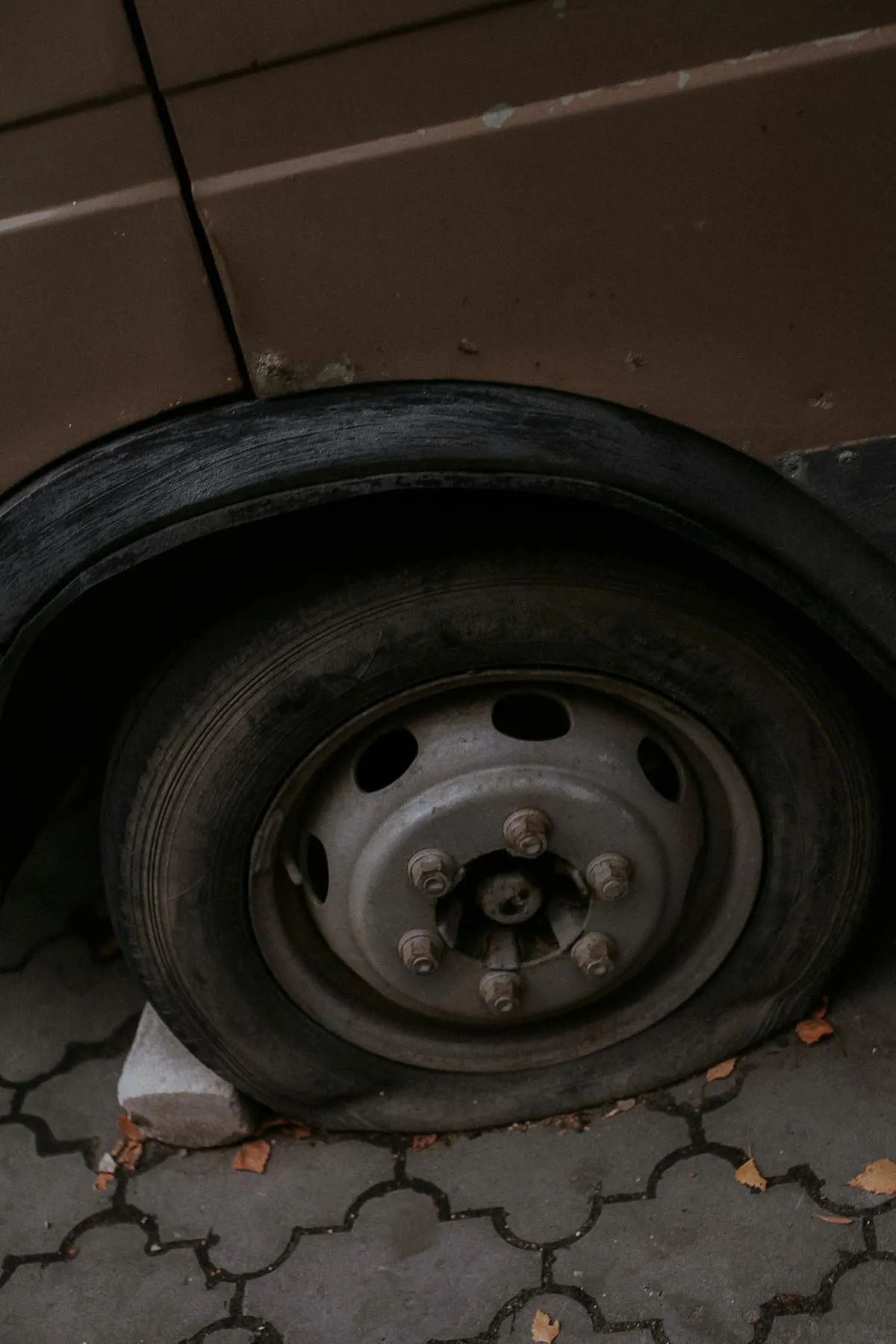
A tyre bulge is not repairable and it isn't safe to drive on. If you can see one, stop using that tyre and get it replaced. A bulge, sometimes called an egg or a blister, shows that the structure inside the tyre has failed and the outer rubber is doing a job it was never built to do. Pirelli puts it plainly: it is not possible to safely fix a tyre bulge, because the structure of the tyre is no longer stable (Pirelli).
This guide explains what a bulge actually is, what causes one, how to find it (including the ones hiding on the inner sidewall), where the law and the MOT stand, and what to do next if you've just spotted one.
What is a tyre bulge?
A tyre bulge is a raised swelling on the tyre, usually on the sidewall, where the internal structure has been damaged. A car tyre isn't just a rubber ring. Under the rubber sits the carcass: layers of ply cords that give the tyre its shape and hold in the air pressure. When some of those cords break, air pushes the rubber outward at the weak spot and you get a lump.
Michelin explains that after a kerb strike the bulge appears because the carcass ply behind the rubber has been damaged, and that the tyre can't be restored to the qualities it needs to perform properly (Michelin). The lump you can see is only the symptom. The real damage is inside, and there's no way to judge from outside how much of the casing has gone.
Most bulges appear on the sidewall, the part of the tyre that flexes as the wheel turns and gets pinched when a tyre meets a kerb or a pothole edge. The MOT inspection manual also lists lifting of the tread rubber alongside lumps and bulges, so a raised patch on the tread is treated just as seriously (DVSA MOT inspection manual).
Is it safe to drive with a tyre bulge?
No. A bulge is a weak point that can give way suddenly. Pirelli warns that a bulging tyre could burst, potentially resulting in loss of control of the vehicle. Michelin adds that a burst at motorway speeds can mean a sudden loss of air, loss of control and an accident.
The honest answer to "how long will it last?" is that nobody can tell you. It depends on how many cords have broken, how hot the tyre runs, how much weight the car is carrying and how fast you're going. None of that is visible. A bulge that has been there for a week without trouble hasn't proved itself safe. It's a damaged tyre that hasn't failed yet.
That's why DVSA classes a lump, bulge or tear caused by separation or partial failure of the tyre's structure as a dangerous defect at the MOT, the most serious of the defect categories (MOT inspection manual, section 5.2.3).
What causes a tyre bulge?
Most bulges come from an impact that pinches the sidewall between the road and the wheel rim. Pirelli lists five main causes, and Michelin's guidance singles out kerbs and potholes:
- Hitting a pothole or speed bump hard enough to crush the sidewall against the rim. If a pothole did it, our guide to pothole damage and how to claim explains your options.
- Striking a kerb, head-on or at an angle, often while parking or turning.
- Over-inflation, meaning the tyre is run above the pressure the vehicle manufacturer specifies.
- A manufacturing defect in the tyre itself.
- An accident, including a low-speed knock that hits the wheel.
Pressure is the cause you can control. The Highway Code says tyres must be correctly inflated to the vehicle manufacturer's specification for the load being carried (Highway Code, Annex 6). Our tyre pressure guide shows where to find your figures.
The practical lesson is simple. After any impact hard enough to make you wince, look at that tyre properly before your next journey, inner face included.
How to spot a bulge, including on the inner sidewall
Some bulges are obvious from the pavement. Others sit on the inner sidewall, facing under the car, where you won't see them without looking for them. Michelin notes that bulges can appear on the inner sidewall and that abnormal vibration is usually the warning sign. A thorough check takes a few minutes per wheel:
- Park on level ground with the handbrake on.
- Turn the steering to full lock before switching off, so the inner face of each front tyre swings into view.
- Look along the sidewall rather than straight at it. A bulge stands out in profile against the light far better than head-on.
- Use a torch and your phone camera for the inner sidewalls of the rear tyres.
- Roll the car forward half a wheel turn and check again, because the section touching the ground is hidden.
On the road, take notice of a new vibration or a rhythmic thump that speeds up with the car, especially after hitting something. It won't always be a bulge (a buckled wheel can feel similar, see signs of a buckled alloy), but it's a reason to stop somewhere safe and look.
This table sets out how the MOT inspection manual treats the damage you're most likely to find:
| What you find | MOT category | What to do |
|---|---|---|
| Lump, bulge or tear caused by structural failure | Dangerous | Stop driving on it and replace the tyre |
| Cords exposed or damaged | Dangerous | Stop driving on it and replace the tyre |
| Cut deep enough to reach the ply or cords | Major | Replace the tyre |
| Cracks, or an object stuck in the tyre | Depends on the damage | Have it inspected by a tyre professional |
TyreSafe's advice for anything you're unsure about is the same: if a tyre has lumps or bulges it must be examined by a tyre specialist, because these could indicate internal damage (TyreSafe).
Is a tyre bulge legal, and will it fail the MOT?
A tyre bulge is not legal. The Road Vehicles (Construction and Use) Regulations 1986 say a vehicle must not be used on a road with a tyre that has any lump, bulge or tear caused by separation or partial failure of its structure, or with any of the ply or cord exposed (regulation 27, legislation.gov.uk). How much tread is left makes no difference.
Penalties apply per tyre. TyreSafe explains that each illegal tyre can bring a fine and three penalty points, so a car with more than one defective tyre can put a driving licence at risk (TyreSafe). Our guide to illegal tyre fines and penalty points covers the detail.
At the MOT, as above, a bulge is a dangerous defect and the car fails. If you spot one before a test, replace the tyre first. Why tyres fail the MOT lists the other tyre faults testers look for.
Can a tyre bulge be repaired?
No. Puncture repairs work by sealing a small hole in the central part of the tread. A bulge is a different kind of damage: the cords themselves have broken, and no plug, patch or sealant restores them. Pirelli and Michelin both say a bulging tyre has to be replaced.
We repair punctures to BS AU 159, the British Standard for tyre repairs, and the sidewall is outside the area it allows to be repaired. Our guides to sidewall damage and what can be repaired set out where the line sits, and repair vs replacement covers the wider decision.
Tyre sealant and emergency repair kits won't help either. They're meant for small tread punctures, not a failed casing. See is tyre sealant good or bad.
What to do if you find a tyre bulge
At home or at work: leave the car where it is. If you have a spare and can change the wheel safely, Pirelli's advice is to fit the spare. Check the spare's condition and pressure first, because it's often the tyre that gets the least attention (spare wheel maintenance). If there's no usable spare, have the tyre replaced where the car is parked. That's exactly what our emergency tyre replacement service is for.
While driving: slow down smoothly and get off the road somewhere safe, such as a car park or a quiet side road. On a motorway, leave at the next services or junction only if the car still handles safely; otherwise pull onto the hard shoulder or into an emergency area, get everyone out on the verge side and wait behind the barrier. If you are ever in danger, call 999. National Highways can be reached on 0300 123 5000, and the Highway Code sets out what to do if you break down (Highway Code, rules 274 to 287; National Highways).
If the tyre bursts: the Highway Code says to try to keep control of the vehicle, grip the steering wheel firmly and allow the vehicle to roll to a stop at the side of the road (Annex 6). Our guide to what to do in a tyre blowout goes through it step by step.
Afterwards: check the other tyres, because the same pothole or kerb may have hit two wheels. If the car now pulls to one side or the steering wheel sits off-centre, have the alignment checked at a garage; these signs of misalignment explain what to look for.
Getting a bulging tyre replaced where the car is
Rescue Tyres is a fully mobile tyre service covering London, the Home Counties and the Midlands, seven days a week with 24-hour callouts. The van carries tyre fitting and wheel balancing equipment, so a damaged tyre can be replaced at your home, your workplace or a safe roadside spot. If the tyre has already failed, see our broken tyre page.
When you call or WhatsApp 07473 720871, tell us the tyre size from the sidewall (or your registration) and where the car is. We source a budget, mid-range or premium tyre to fit, confirm the price on the call before any work, and agree a realistic arrival time with you. You pay once the job is done, and you can also book online.
