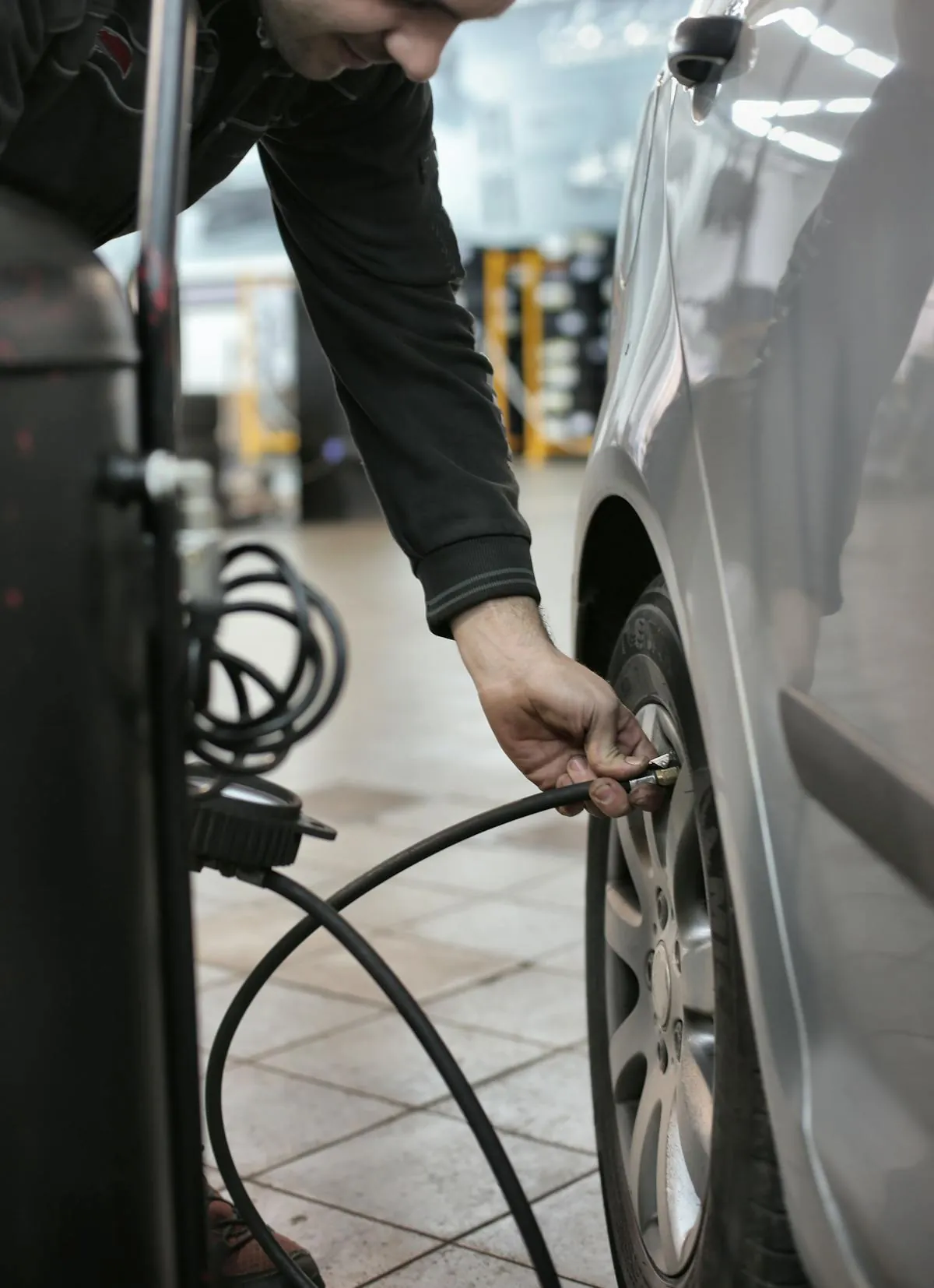
The correct pressure for your car is set by the manufacturer, not the tyre. You'll find it on a placard in the driver's door shut, inside the fuel filler flap, or in the handbook. The number moulded into the tyre sidewall is the maximum the tyre can take, not your target, so don't set your pressures to that.
Getting this right is one of the cheapest, highest-impact things you can do for safety, fuel economy and tyre life. Here's where to find your figure, how to set it properly, how to read the units, and why it matters more than most drivers think.
Where to find the right figure
Every car has a recommended pressure printed somewhere obvious, and it's specific to your model and tyre size. The three places to look are:
- Driver's door sill or shut, the most common location, visible when you open the door.
- Fuel filler flap, on many cars.
- Handbook, which always has the full table, including different sizes if your car was offered with more than one wheel option.
Most placards list two figures: a normal pressure and a higher "laden" pressure for when the car is fully loaded with passengers and luggage. Pick the one that matches how the car is loaded for that journey. If your car came with optional larger wheels, make sure you read the row that matches the tyre size actually fitted.
How to check and set pressures
Accuracy and timing both matter. A reading taken on a hot tyre or with a drifting gauge can be several PSI out, which is enough to affect handling and wear.
- Check when tyres are cold, before driving or after no more than a mile or two.
- Use an accurate gauge; forecourt machines can drift, so cross-check with your own where you can.
- Set each tyre to the recommended figure, and don't forget the spare if you have one.
- Use the laden figure for heavy loads or motorway trips with a full car.
- Refit the valve caps, which keep dirt and moisture out of the valve.
TyreSafe recommends checking pressures at least once a month and before any long journey, advice echoed across the tyre industry, see TyreSafe. Build it into a fuel-stop habit and it takes two minutes.
PSI, bar and the laden figure
UK placards and gauges usually show pressure in PSI (pounds per square inch), though some use bar; roughly, 1 bar is about 14.5 PSI, so a typical car pressure of around 32 PSI is about 2.2 bar. You don't need to convert if your gauge matches the placard's units, just match the numbers.
The laden figure trips a lot of people up. It's not "for show", it's the pressure to run when the car is heavily loaded, because more weight needs more support from the tyre. If you set off on a family holiday with a full boot and roof box on the normal figure, the tyres will be effectively under-inflated for that load, which raises heat and blowout risk.
Why correct pressure matters
Pressure affects almost everything a tyre does. Under-inflation overheats the tyre, wears the shoulders, raises fuel use and increases blowout risk because the sidewall flexes too much. Over-inflation does the opposite: it reduces the contact patch, cuts grip and wears the centre of the tread.
Both shorten tyre life and hurt safety, and both show up as uneven wear, see why tyres wear unevenly. Correct pressure is the simplest way to protect your tyres and your fuel bill at once, and it's the first thing to check if your TPMS light comes on.
Let us check it for you
We check and set pressures on every visit, against the manufacturer's figure for your car. If a tyre won't hold pressure, we'll find out why, often a slow puncture or a corroded rim, and fix it on the spot. Book a mobile visit across the UK.