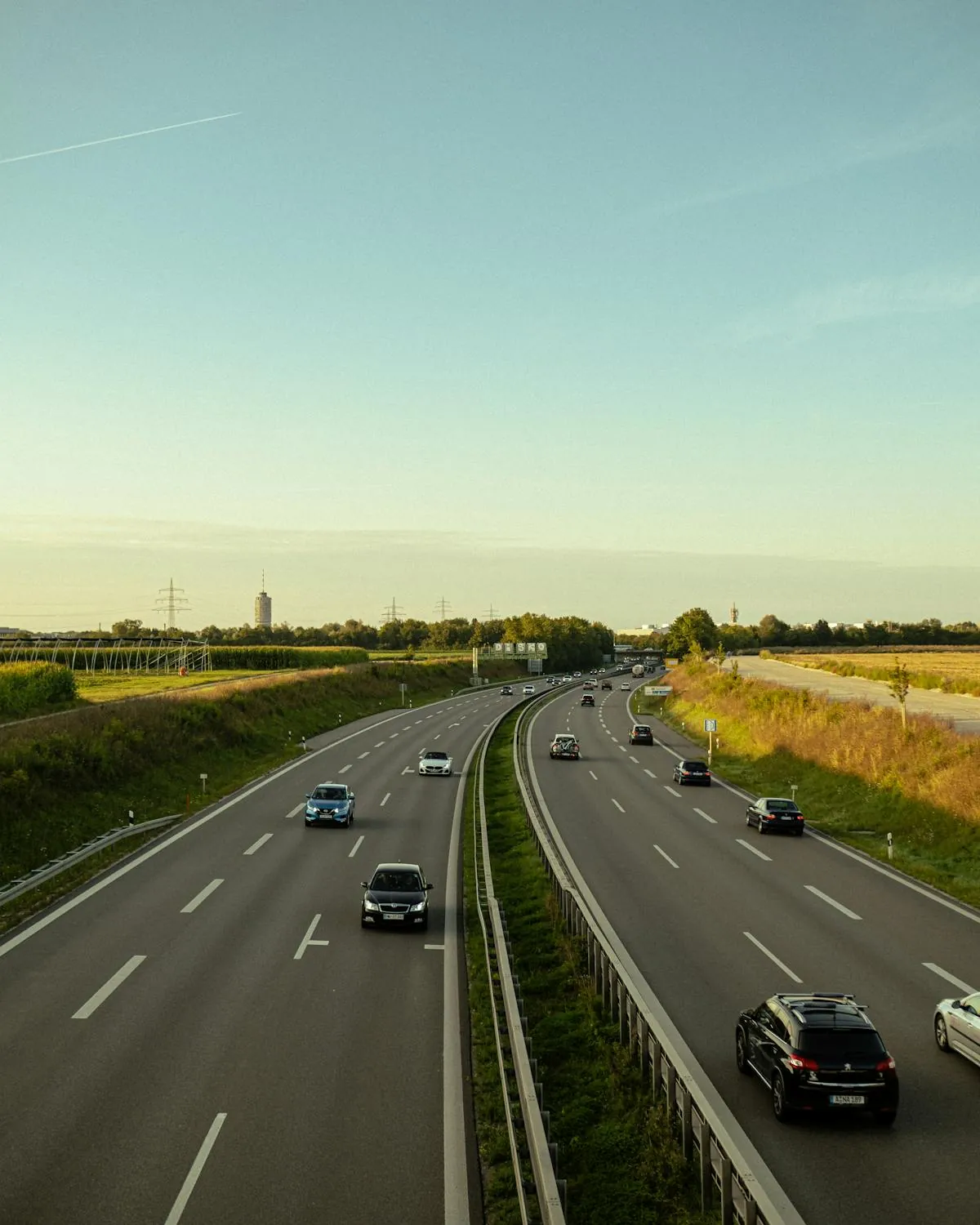
If a tyre blows out at speed, the instinct to brake hard is exactly wrong. Hard braking or swerving can spin the car. Instead, hold the wheel firmly, keep the car pointing straight, lift off the accelerator and let the car slow on its own before easing onto the hard shoulder or verge. Staying calm for those few seconds is what keeps the car stable.
The step-by-step response
Commit this sequence to memory now, because there's no time to think it through when it happens:
- Grip the wheel firmly with both hands, as the car will pull towards the blown tyre.
- Keep straight. Don't yank the wheel or brake sharply.
- Ease off the accelerator and let the car slow gradually.
- Steer gently to a safe place once you're slow enough.
- Hazards on, and get out of the car away from traffic if you're on a fast road.
Why braking is dangerous
A blown tyre is already dragging that corner of the car, pulling it off line. Add hard braking and you risk locking up and losing control entirely, particularly if it's a front tyre and you're mid-corner. Smooth, gentle inputs keep the car balanced while it scrubs off speed naturally, which is the safest way to bring it under control. The physics are counter-intuitive, which is exactly why rehearsing the right response in advance matters, your instinct will be to brake, and you need to override it.
Once you've stopped safely
On a motorway, get behind the barrier and follow our hard-shoulder safety advice. The Highway Code is clear that you shouldn't attempt a roadside wheel change on a live carriageway, it's far too dangerous. Get everyone, including pets, out of the car on the side away from traffic and up the verge, then call for help and wait in a safe place rather than near the vehicle.
Prevent the next one
Most blowouts trace back to under-inflation, worn or old tyres, or hidden impact damage, see our guide to causes and prevention. Keeping pressures correct and tyres in good condition is the single best defence, because heat from a soft tyre is what triggers most failures. A monthly pressure check and a quick look for cracks and bulges removes most of the risk before you ever set off.
Blown a tyre? We'll come to you
Our burst tyre service and 24-hour callouts reach you across the UK, usually within the hour, and fit a replacement on the spot, with no tow truck needed. Book a rescue.