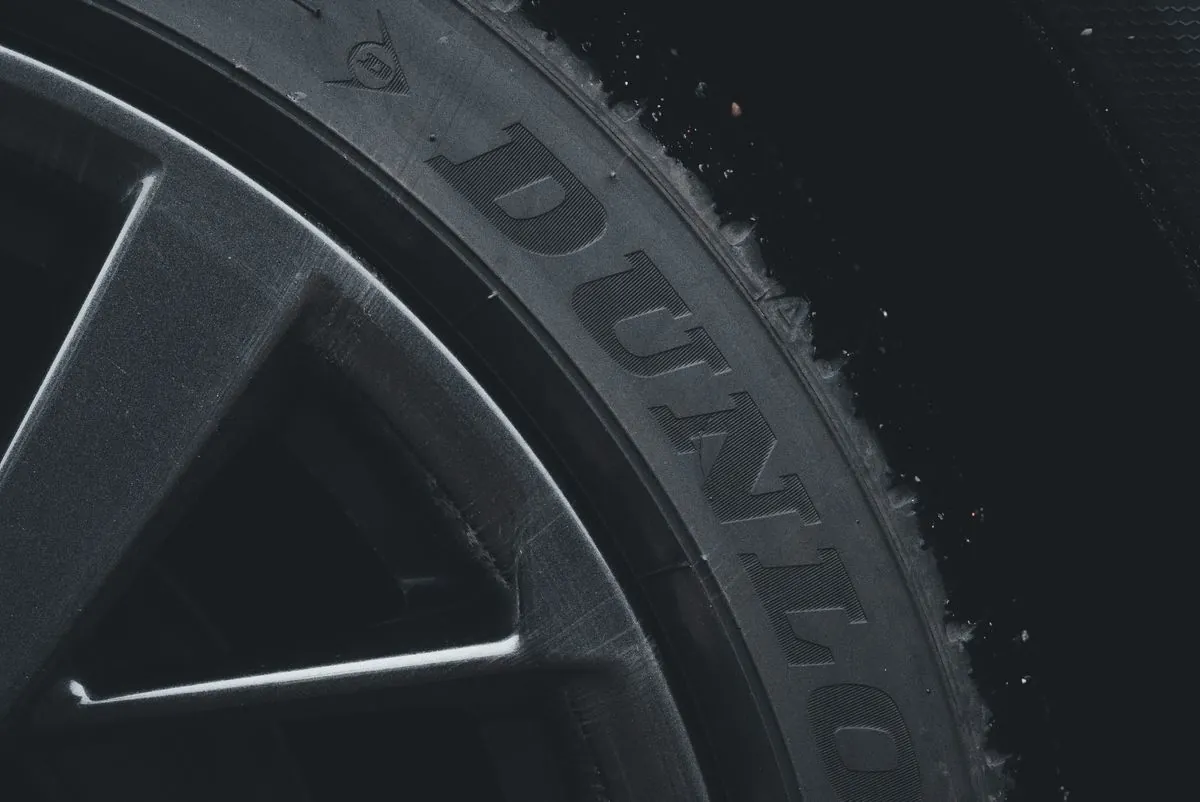
A tyre can be unsafe from age alone, even with plenty of tread left. Rubber hardens and cracks over time, reducing grip and raising the risk of sudden failure. Most manufacturers recommend replacing tyres at 5 to 10 years old regardless of tread, and many advise against fitting any tyre that's already over six years old. Age, not just wear, is what decides when a tyre's time is up.
The good news is that every tyre carries its own birth certificate. Here's how to find and read it, why age matters as much as tread, which tyres are most at risk, and where the law now stands.
How to read the DOT date code
Every tyre has a DOT code on the sidewall ending in four digits. The first two are the week of manufacture; the last two are the year. So "2624" means the 26th week of 2024. If you only see three digits, the tyre was made before 2000 and should be replaced immediately, it's far too old to trust. The code is sometimes on the inner sidewall, so you may need to look on both sides or have the wheel turned.
Why age matters as much as tread
Heat, sunlight and oxygen slowly break down rubber compounds in a process called oxidation. An old tyre may look fine but have lost flexibility, leading to cracking and, in extreme cases, tread separation at speed. This is why a tyre with deep tread can still be dangerous if it's old, the rubber simply doesn't grip or hold together the way it did. Cars that cover low mileage are most exposed, because their tyres age out long before the tread wears down.
Where to look beyond the date
Some tyres age out long before they wear out, so these are the ones to check first:
- Spare wheels – often the oldest tyre on the car, sitting unused for years.
- Caravans and trailers – check these every season, as many fail on age, not mileage.
- Part-worn tyres – can be deceptively old; see our guide to part-worn risks.
- Classic and low-mileage cars – the tyres may be a decade old despite looking barely used.
Alongside the date, look for fine cracking in the sidewall and tread grooves, which is a clear sign the rubber is perishing.
The law on old tyres
For cars there's no fixed legal age limit, but a perished or cracked tyre can be illegal on condition and fail the MOT. For larger vehicles the law is explicit: tyres over 10 years old are banned from the front axles of buses, coaches and HGVs, and from minibuses, a rule the Government introduced (GOV.UK) on safety grounds after research into ageing tyres. The same ageing process affects car tyres, which is why the manufacturer guidance to replace at 5 to 10 years is worth following.
Not sure how old your tyres are?
Our fitters can check the DOT dates and condition when we come to you, including the spare, which is the one most people forget. If a tyre's aged out, we'll fit a fresh one on the spot anywhere across the UK. Book a visit or call our team.