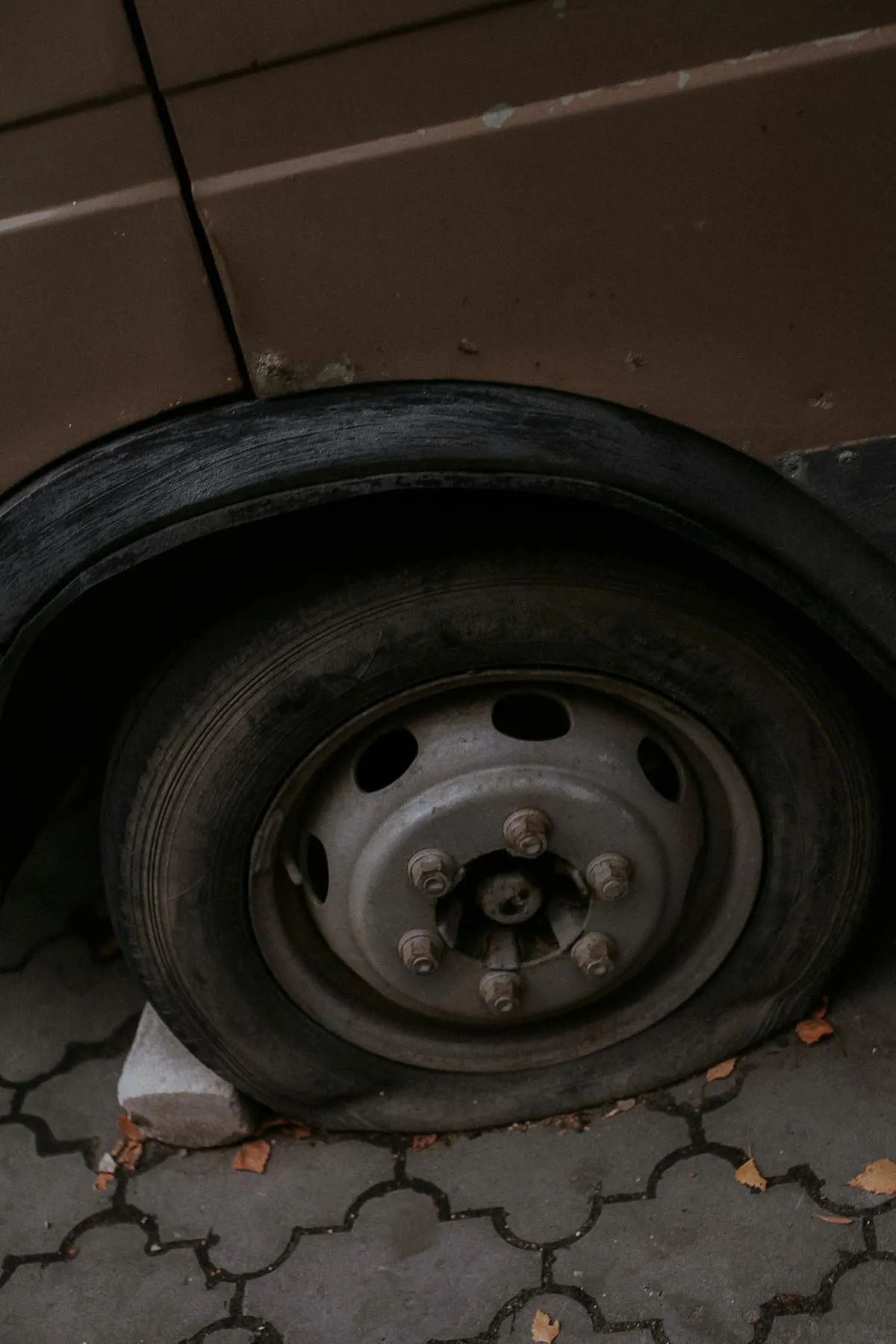
A growing number of new cars come with a tyre repair (sealant) kit instead of a spare wheel. It saves weight and boot space and helps fuel economy, but it only works for small punctures in the tread. For sidewall damage, a blowout or a shredded tyre, a sealant kit won't help at all, which catches a lot of drivers out at the worst moment.
How a tyre repair kit works
You connect a small compressor and pump liquid sealant into the tyre through the valve. The sealant coats the inside and plugs small holes while you drive slowly to the nearest fitter. It's a temporary get-you-going fix, not a repair, and the tyre usually needs replacing or a proper inspection afterwards, so don't think of it as a permanent solution, and TyreSafe warns sealant has clear limits beyond a small tread puncture.
Limitations to know
- No good for holes larger than about 4mm or any sidewall damage.
- Sealant can make a professional puncture repair impossible, forcing a new tyre.
- Kits have an expiry date, so check yours is still in date before you need it.
The case for a spare wheel
A full-size or space-saver spare lets you swap the wheel and carry on, whatever the damage. The downside is the space, the weight, and the fact that you need to be willing and able to change a wheel safely at the roadside, which isn't always practical in the dark, the rain or on a busy road. But for a blowout or sidewall damage, where a sealant kit is useless, a spare is the one thing that gets you moving again under your own steam.
Space-saver vs full-size spare
If your car has a spare, it's worth knowing which type. A space-saver is the narrow temporary wheel most cars carry where a spare is fitted at all: it saves space but is limited to around 50mph and short distances, just enough to reach a fitter. A full-size spare is a normal wheel and tyre you can drive on indefinitely, though it may not match the others if it's an older steel wheel. Either way, check the spare's pressure and age occasionally, because a spare that's flat or perished when you need it is no use at all. The spare is the most forgotten tyre on the car.
The third option: a mobile fitter
If you have neither a usable spare nor a working kit, or you simply don't want to change a wheel on a hard shoulder, we come to you. Our 24-hour mobile tyre service reaches you across the UK, repairs where it's safe and replaces where it isn't. For many drivers, knowing a fitter can reach them quickly is more reassuring than either a kit or a spare. Book a callout.