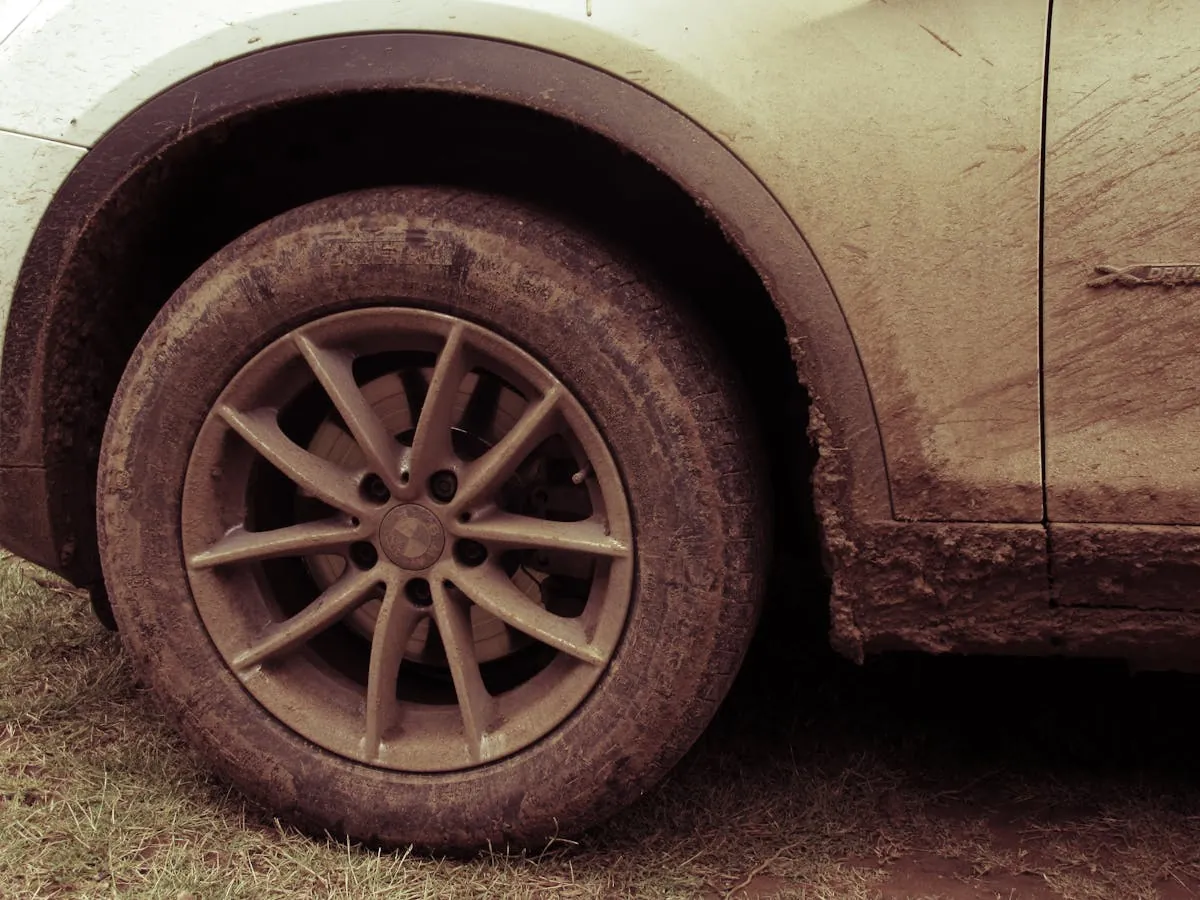
Sidewall damage cannot be safely repaired, the tyre needs replacing. Unlike the tread, the sidewall flexes thousands of times a minute and carries the car's load. A repair there can't restore that strength, and a failed sidewall repair can blow out at speed. UK repair standards only permit repairs in the central tread area, never the sidewall.
It's not what anyone wants to hear when a bulge appears, but understanding why makes the safety case obvious. Here are the types of damage, the reason the sidewall can't be patched, what causes it, and where the law stands.
Types of sidewall damage
Sidewall damage shows up in a few distinct ways, and all of them point to replacement:
- Bulges or blisters – the internal cords have broken, usually after a pothole or kerb strike. Replace immediately.
- Cuts and gouges – anything deep enough to reach the cords beneath the rubber.
- Cracking ("crazing") – perished rubber from age or UV exposure.
- Sidewall punctures – any puncture outside the safe central repair zone.
Why the sidewall can't be repaired
The tread sits on a stiff steel-belt package, which is why a central tread puncture can be safely patched. The sidewall has no such reinforcement, it's designed to flex as the tyre rolls and absorbs bumps. A plug or patch there creates a weak point that heat and constant flexing will eventually tear open, often without warning. This is why the British Standard for tyre repair (BS AU 159) confines repairs to the central tread, and no reputable fitter will touch the sidewall.
What causes sidewall damage?
Kerbing the wheel, hitting potholes at speed, and persistent under-inflation are the big three causes. Under-inflation is the sneaky one: a soft tyre flexes excessively, overheating the sidewall and weakening it from the inside long before any damage shows. If you've recently hit a pothole and noticed a bulge, stop driving on that tyre, because the cords have already failed.
Is it legal to drive on?
No. A bulge or lump in the sidewall is illegal in its own right under the tyre safety law (GOV.UK), regardless of how much tread the tyre has. It's an automatic MOT failure and can earn a fine and penalty points, on top of the obvious safety risk. A cut deep enough to reach the cords is treated the same way. In short, sidewall damage takes the tyre off the road immediately.
Don't risk it, replace it
A bulging sidewall can let go without warning, often at motorway speed where it's most dangerous. Our broken tyre and burst tyre services bring a replacement to you across the UK, so you never have to drive on a compromised tyre. Book a replacement.