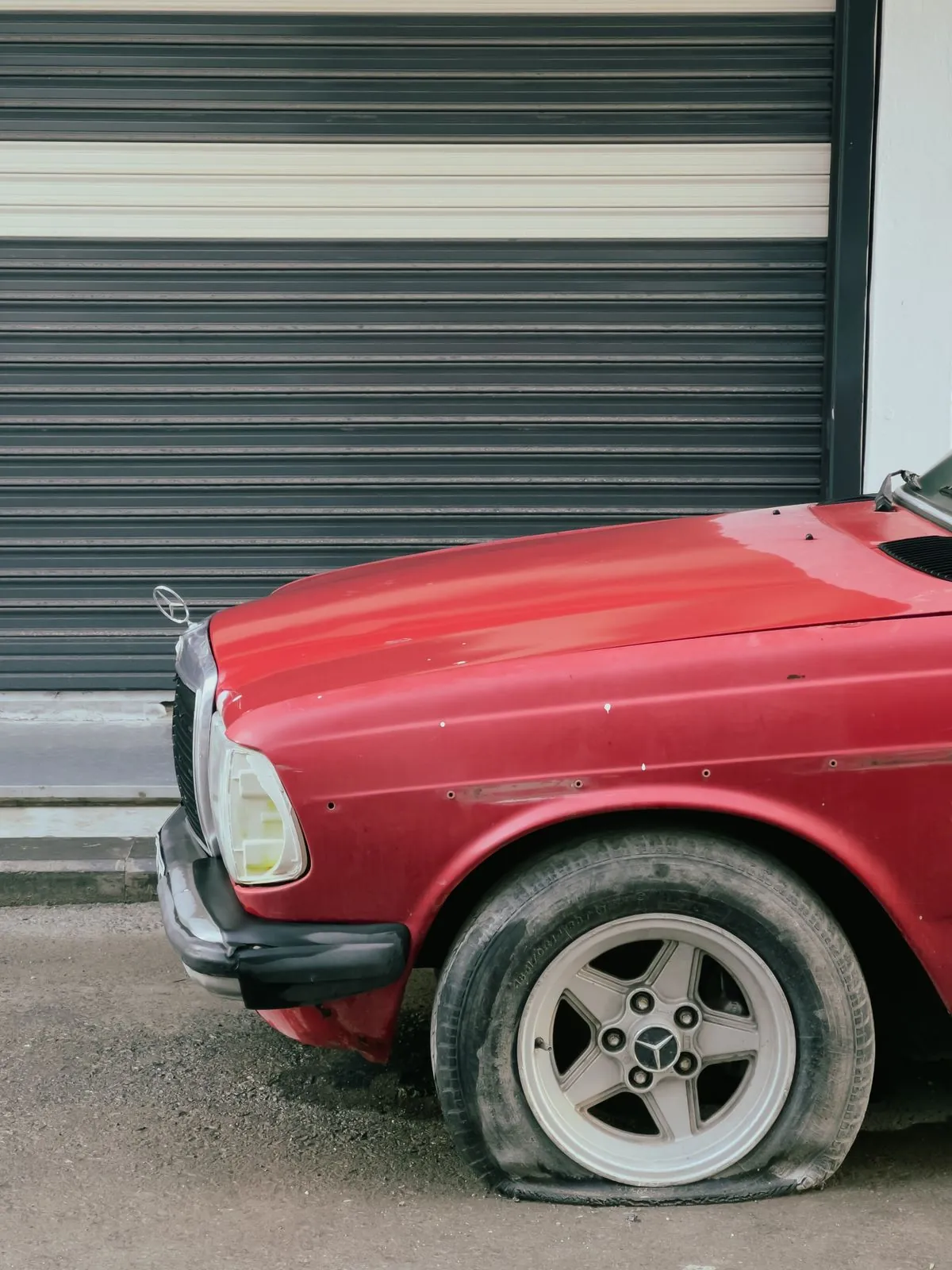
Driving on a flat tyre is not safe. Once a tyre has lost its air it can no longer support the car properly, steering and braking suffer, and within a very short distance you'll destroy the tyre and risk damaging the alloy, the brakes and even the suspension. The only acceptable movement is a few metres at walking pace to reach a safe spot, and no further. A defective tyre also breaches the tyre safety law (GOV.UK).
What happens when you drive on a flat
The deflated sidewall folds under the rim and overheats almost instantly. The tyre shreds, the metal rim contacts the road, and you can lose directional control, particularly at speed or in a corner. A repairable puncture quickly becomes a guaranteed new tyre, and possibly a new wheel too, turning a cheap fix into an expensive one in the space of a mile. On a front wheel it also makes the steering heavy and unpredictable, which is the last thing you want if you're trying to reach safety.
What to do instead
The moment you realise a tyre has gone, switch from "keep going" to "stop safely":
- Slow down gradually and avoid braking hard or swerving.
- Pull over somewhere flat, firm and away from traffic.
- Hazards on, and on a motorway get behind the barrier if you can.
- Call for help rather than attempting to drive on.
Run-flats are the exception, sort of
Run-flat tyres are designed to be driven on after a puncture, but only for a limited distance (typically around 50 miles) and at reduced speed (usually up to 50mph). They are the only tyres engineered for this, and even then the tyre usually needs replacing afterwards. A standard tyre has none of that reinforcement, so the rules are completely different, and you should never treat a normal tyre as if it can limp along like a run-flat.
What it can cost you
It's worth being clear about the bill, because that's often what tempts people to "just get home". A puncture that could have been a cheap repair becomes, at minimum, a new tyre once you've driven on it flat. If the rim is buckled or gouged you're into a new wheel as well, and a badly bent alloy can throw the balance out or fail to seal a tyre afterwards. In the worst cases the heat and debris damage brake or suspension components. So the few miles "saved" by driving on can easily cost several times the price of a callout, which is exactly the wrong trade.
Stuck with a flat right now?
Don't risk the rim or your safety. Our 24-hour mobile tyre fitters come to wherever you've stopped across the UK, usually within the hour, and either repair the puncture or fit a replacement on the spot. Book a rescue or call now.