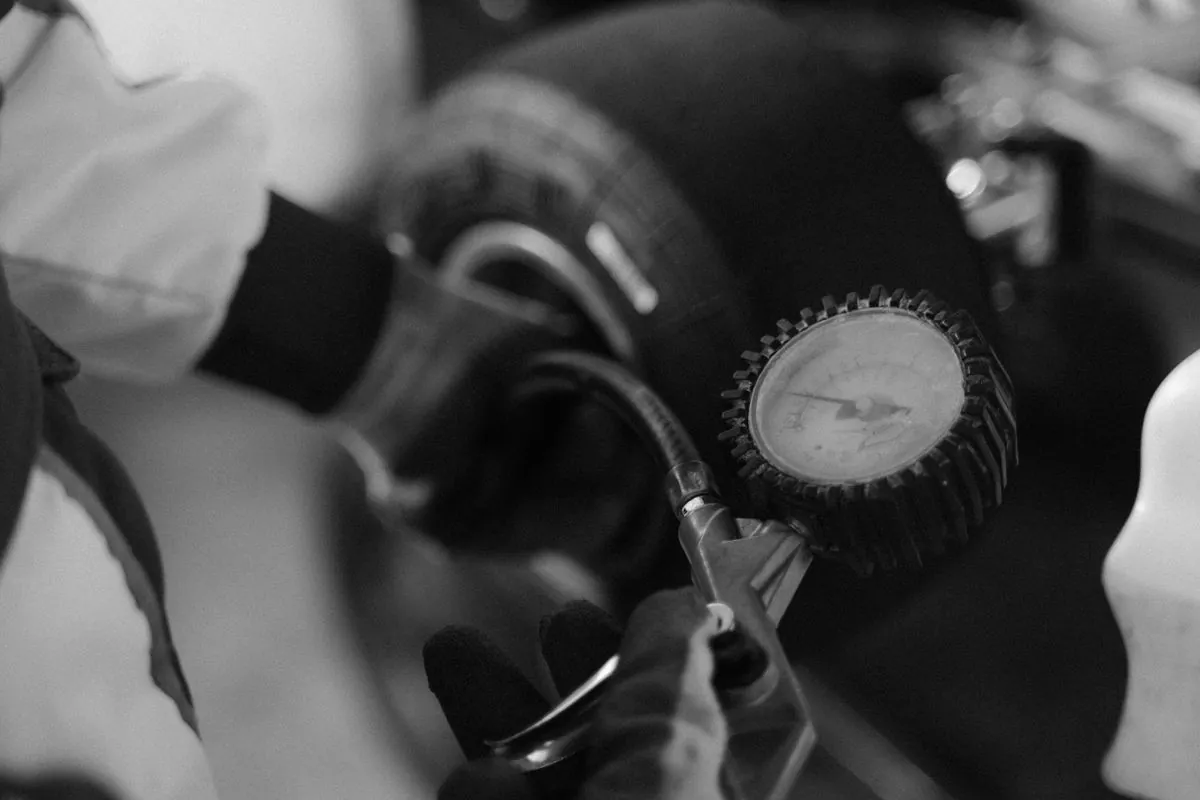
Balancing and alignment are two different jobs that people often mix up. Balancing fixes vibration by evening out the weight around a wheel and tyre; alignment fixes pulling and uneven wear by adjusting the angles the wheels sit at. New tyres always need balancing; alignment is a separate check. Get the two confused and you can end up paying for the wrong fix.
What wheel balancing does
No tyre and wheel combination is perfectly even in weight. Spun at speed, a small heavy spot causes vibration, usually felt through the steering wheel at certain speeds. A balancing machine spins the wheel, finds the heavy point, and small weights are clipped or stuck to the rim to cancel it out. Every new tyre we fit is balanced as standard, because it's what stops a fresh tyre vibrating and wearing unevenly.
What alignment does
Alignment sets the angles (toe, camber and caster) at which the wheels meet the road. Correct angles mean the car tracks straight and the tyres wear evenly across their width. It's a suspension adjustment rather than a wheel-and-tyre job, which is the key reason it's separate from balancing. Alignment is what you check after hitting a pothole or kerb, not balancing.
How to tell which you need
The symptom usually points straight to the fix. This quick reference covers the common ones:
| Symptom | Likely fix |
|---|---|
| Vibration at speed | Balancing |
| Car pulls to one side | Alignment |
| One-edge tyre wear | Alignment |
| Patchy/cupped wear | Balancing or suspension |
| Off-centre steering wheel | Alignment |
When to have them done
Balance whenever a tyre is fitted, or if you feel new vibration through the wheel. Check alignment after kerb or pothole impacts, or whenever you spot uneven wear. It's good practice to have alignment checked when you fit a new set of tyres too, so you're not wearing fresh rubber on angles that are already out. We balance every tyre we fit, at your location across the UK, so you drive away smooth.
What happens if you ignore it
Ignoring a balance problem means living with vibration that gets worse as it shakes the suspension and steering components, and it can cause patchy "cupped" wear that ruins the tyre. Ignoring alignment is more expensive still: it can wear one edge of a tyre clean off in a few thousand miles, and it wastes fuel the whole time because the tyres are scrubbing rather than rolling. Both are cheap to put right and costly to leave, which is why it pays to act on the first sign. Correct fitting and balancing is part of the tyre-safety basics TyreSafe promotes.