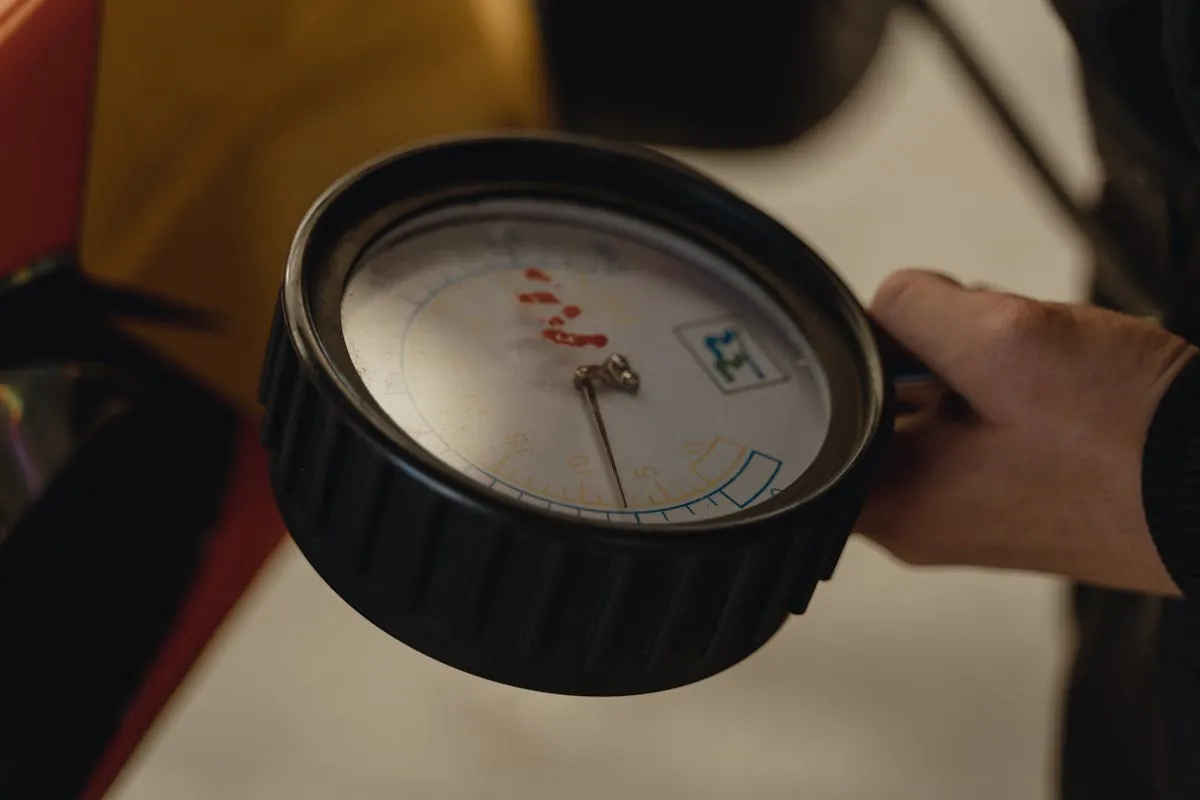
Check your tyre pressures at least once a month, and always before a long journey. Even healthy tyres lose air gradually through the rubber and valve, and a small drop hurts grip, economy and tyre life long before you'd notice it from behind the wheel. A five-minute check beats discovering the problem at the roadside.
Why monthly?
Tyres can lose a small amount of pressure every month just through natural permeation, and more in cold weather. A tyre that's a few PSI low won't feel dramatically different, but it wears unevenly, uses more fuel and is more prone to overheating. That's why tyre-safety charity TyreSafe recommends a monthly check as a minimum for every driver. Monthly is frequent enough to catch a gradual loss before it matters, without being a chore.
Don't rely on the TPMS alone
A TPMS is a safety net, not a substitute for checking. Many systems only warn once a tyre is significantly low, often around 25% under, by which point you've already lost performance and worn the tyre. Some indirect systems can also be fooled by a gradual loss across all four tyres at once, because they work by comparing wheel speeds. A monthly manual check catches problems far earlier than the warning light ever will.
When to check more often
Monthly is the baseline, but some situations call for an extra check:
- Before any long or motorway trip.
- When the car is heavily loaded (use the laden pressure figure).
- After a big temperature change, see cold-weather pressure.
- If you suspect a slow puncture.
- After hitting a pothole or kerb that might have damaged a tyre.
How to check properly
Always check when cold, before driving or after no more than a mile or two, using an accurate gauge, and don't forget the spare if you have one. Set each tyre to the figure on your door placard, not the maximum on the sidewall, and refit the valve caps to keep dirt out. It takes five minutes and saves money, fuel and tread. A small digital gauge of your own is worth having, since forecourt machines can drift out of calibration.
What low pressure costs you
Running even a few PSI low has a real, ongoing cost. Under-inflated tyres flex more, which raises rolling resistance and pushes up your fuel bill every mile. They wear faster and unevenly on the shoulders, shortening their life. And the extra flexing builds heat, which is the leading cause of a blowout. So the monthly check isn't just about avoiding a flat, it quietly protects your fuel economy, your tyre life and your safety all at once, which is a lot of return for two minutes at a fuel stop.