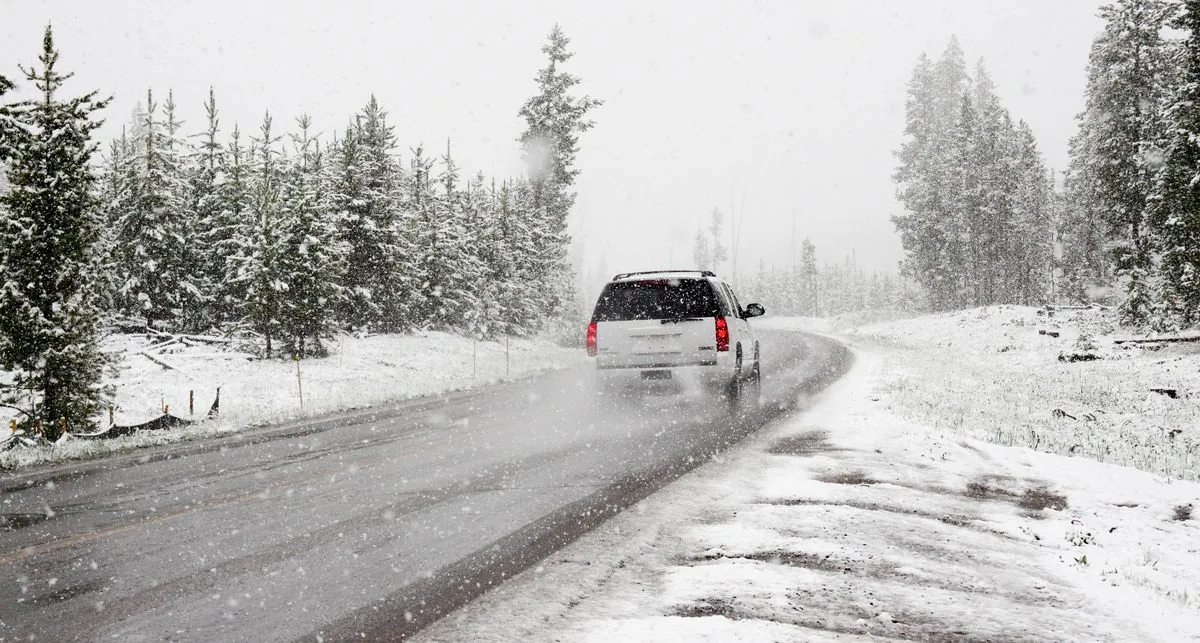
Cold weather makes the air in your tyres contract, so pressure drops, often by 1 to 2 PSI for every 5°C fall in temperature. That's why a frosty morning frequently triggers the TPMS warning light even when there's no puncture at all. The fix is usually simple: top up to the correct pressure once you've ruled out a leak.
The science, briefly
Air pressure rises and falls with temperature. Park overnight in a sharp frost and the same tyre that read correctly in milder weather can read low by morning. It usually recovers a little as the tyre warms with driving, but if it's genuinely low against the recommended figure, it needs topping up rather than just waiting for it to warm. The effect is purely physical and happens to every tyre, which is why winter is the season the TPMS light appears most.
Cold snap or slow puncture?
A small uniform drop across all four tyres after a cold night is usually just temperature. One tyre that keeps going down is more likely a slow puncture. The simple test is to top all four up to the correct figure and watch over a week: if one tyre alone keeps dropping while the others hold, that's a leak rather than the weather, and it's worth getting checked before it lets you down on a cold morning.
How to set pressures in winter
The method matters as much in winter as any time:
- Check when tyres are cold, before driving or after only a mile or two.
- Use the recommended figure from the door sill or handbook.
- Don't over-inflate to silence a winter light, because that reduces grip on cold roads.
- Recheck after any big temperature swing, which winter brings plenty of.
TyreSafe recommends checking at least monthly, and winter is exactly when that habit pays off.
Why it matters more in winter
Correct pressure matters year-round, but the stakes are higher on cold, wet roads. An under-inflated tyre has a distorted contact patch, which cuts grip just when grip is scarcest, and it clears water less effectively, raising the risk of aquaplaning. Add the longer stopping distances that come with cold, wet tarmac, and a soft tyre in winter is a meaningfully bigger safety risk than the same tyre in summer. Keeping pressures spot-on is one of the cheapest things you can do for winter safety, alongside checking your tread and considering winter or all-season tyres.
Light won't go off?
If you've set the pressures correctly and the light persists, the tyre or a TPMS sensor may need attention, and sometimes a sensor battery fails in the cold. We can check both at your location across the UK. Book a check.