HomeServicesTyresLocationsBlogAboutReviewsContactBook Now
Mobile service · we come to you

Run-flat tyres,
fitted at home.

Run-flat warning on? We source the correct run-flat for your car and fit it at your home, work or a safe roadside spot. Price confirmed on the call, and you pay once the job is done.

★★★★★5.0 on Google from 151 reviews·Usually under an hour across most of London, longer further out; confirmed when you call
5.0151 Google reviewsPuncture repairs to BS AU 159Price agreed before any workPay when the job is doneUK registered company
Run-flat tyres

Run-flat tyres, fitted where your car is.

A run-flat tyre keeps carrying the car for a limited distance after it loses pressure, but it still needs sorting properly afterwards. Rescue Tyres comes to your home, work or a safe roadside spot and fits the correct run-flat for your car.

  • We come to you: home, work or a safe roadside spot across London, the Home Counties and the Midlands
  • The right tyre for your car: we source the correct run-flat in your size, load and speed rating
  • Price confirmed on the call: agreed before any work, and you pay once the job is done
  • 7 days, with 24-hour callouts: a realistic arrival time is agreed when you call
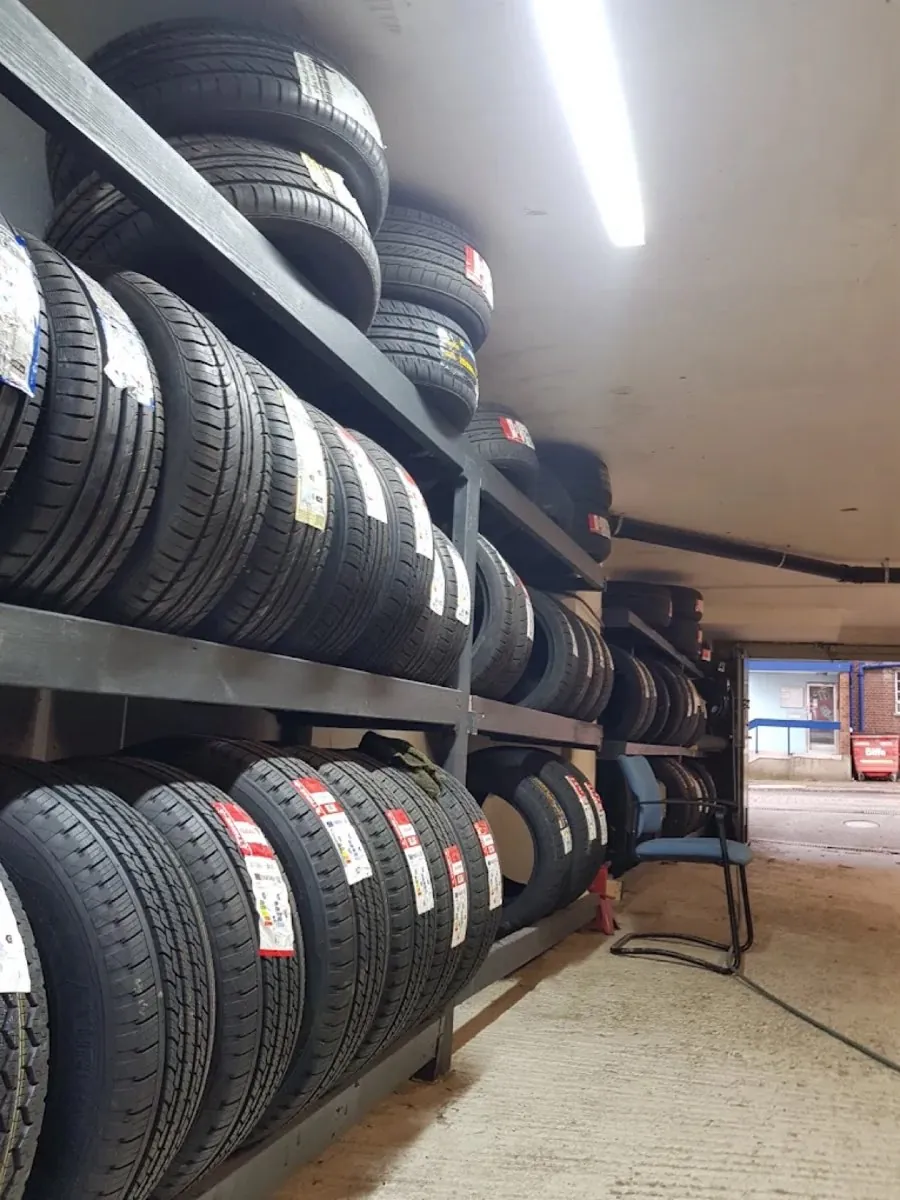
New car tyres at the Rescue Tyres unit in Brent Cross
Check your car

How to tell if you have run-flats

There is no single industry code. Each tyre maker uses its own marking, so check the sidewall and your handbook.

Read the sidewall

Look near the size and brand name. Common markings are RFT (used by Bridgestone and others), SSR (Continental's self-supporting run-flat), ROF or RunOnFlat, and the older EMT, on Goodyear tyres, DSST or ROF on Dunlop, and ZP on Michelin. Some run-flats also show an F before the rim size, such as 205/55 RF 16.

Car maker markings

BMW run-flats carry RSC inside a circle, short for Run-Flat System Component. Mercedes-Benz uses MOExtended, or MOE, for tyres developed for its cars with limited run-flat ability. Mention either when you call.

Check the boot and handbook

A car on run-flats usually has no spare wheel, but many new cars come with an inflation kit instead, so check the tyre section of the handbook. Still not sure? Send us a sidewall photo on WhatsApp.

After a puncture

Driving on a run-flat after a puncture

Reinforced sidewalls let a run-flat support the car with little or no air inside, so the car may feel normal. That is why a working tyre pressure monitoring system is essential: the dashboard warning may be your only sign.

  • Follow your handbook first. Tyre makers generally quote up to 50 miles at no more than 50mph after pressure loss, but the handbook has the final say, and a heavy load or hot weather can reduce the distance.
  • Use the range to reach somewhere safe, such as home, a car park or a quiet side street, not to finish a long journey.
  • On a motorway, keep going to the next services or junction exit, then find a safe side road or car park. We do not work on a hard shoulder, in a refuge or in an emergency area. If you are in danger or cannot get off the motorway safely, call 999 or National Highways.
  • Stop sooner if something feels wrong, such as vibration, noise, a pull to one side or visible sidewall damage. Every mile driven deflated also makes a repair less likely.
Repair or replace

Can a run-flat be repaired?

Sometimes, but far less often than a standard tyre. TyreSafe, the UK tyre safety charity, does not recommend repairing run-flats. Driving on one with no pressure puts the structure under high stress, and the stiff sidewall can hide the damage that would normally show on the inside of a tyre. Tyre makers differ. Some advise against repairing run-flats, especially after they have been driven with a puncture. Others, such as Michelin for its ZP tyres, allow a single repair under the same inspection rules as a standard tyre, provided it was not driven too far or too fast while flat.

So we never promise a repair over the phone. The fitter takes the tyre off the rim, inspects the inside, and checks the damage against the maker's guidance and BS AU 159, the British Standard for puncture repairs. If the tyre has been run deflated, the damage is in the shoulder or sidewall, or the maker advises against repair, we recommend a replacement and explain why. Tell us on the call how far you drove after the warning came on.

New tyres

Replacing run-flats (and switching to standard tyres)

The simplest and safest choice is usually a like-for-like replacement: the correct run-flat in the same size, load and speed rating, with any car maker marking your car calls for. We source it for your car and confirm the price on the call. New tyres carry the manufacturer's warranty.

  • Never mix run-flat and standard tyres. TyreSafe says they must never be mixed on any vehicle, and tyre makers advise against it even axle by axle.
  • Keep pairs matched across an axle, ideally with the same tread pattern.
  • Switching all four to standard tyres is possible on some cars, but you lose the ability to drive on after a puncture, and with no spare wheel you would need another plan. The car was also set up by its maker for run-flats, so check the handbook before switching. Check your handbook and ask us on the call.
  • Going the other way is not advised. TyreSafe and tyre makers recommend against fitting run-flats to a car not designed for them.

Why do car makers use them at all? A run-flat removes the need for a spare wheel and jack, saving space and weight, and lets the driver move away from a dangerous spot instead of changing a wheel beside traffic. BMW is the largest fitter of run-flats as original equipment, and they are also common on MINI and Mercedes-Benz models. The trade-off is a firmer ride from the stiffer sidewalls.

BMW and MINI

BMW and MINI run-flat tyres

Run-flats are common on BMW and MINI models. Here is what the sidewall markings mean, and what to weigh up before replacing them or switching to standard tyres.

RSC in a circle

BMW's technical information says its run-flats carry a circular symbol with the letters RSC, for Runflat System Component, on the sidewall. The system pairs self-supporting tyres with special rims, and BMW states RSC tyres may only be used with a tyre pressure monitoring system or flat tyre indicator, because lost pressure is usually hard to see from outside.

The star marking

A star (★) beside the size marks a tyre tuned and approved for BMW and MINI cars. BMW says these tyres can differ considerably in construction and compound from similarly named tyres, and Michelin advises specifying the tyre the car maker approved when you replace one.

MINI run-flats

MINI says its original complete wheels are fitted exclusively with star marked tyres, and that its star marked run-flats let you keep driving on a flat tyre at up to 50mph, with heat-resistant sidewalls and a rim shape that stops the tyre slipping off. Check your own sidewall for RSC rather than going by the model name.

Switching a BMW or MINI to standard tyres?

  • Change all four together. TyreSafe says run-flat and standard tyres must never be mixed on any vehicle.
  • Plan for the next puncture. Look in the boot first: with no spare wheel you are relying on the inflation kit your handbook lists, or a spare you add yourself.
  • Keep the pressure monitoring working. The fitter checks the valves and sensors when the tyres change.
  • Read the tyre section of the handbook for what your model's maker advises about replacement tyres, and ask us on the call.

If you stay on run-flats, we source the correct run-flat to your size, load index and speed rating, and can look for the star marked version. The price is confirmed on the call, and you pay once the job is done. More detail is in our guide to run-flat tyres explained.

Based on BMW Group, MINI UK, Michelin and TyreSafe guidance. Always check your vehicle handbook.

Step by step

How mobile run-flat fitting works

Run-flats suit a mobile service: rather than driving further on a deflated tyre to find a garage, you stop somewhere safe and we come to you. The van carries tyre-fitting and balancing equipment.

1. Call or WhatsApp

Send the tyre size and any run-flat marking from the sidewall, or just a clear photo, plus where the car is and whether the locking wheel nut key is with it.

2. Tyre and price agreed

We source the correct run-flat for your car, confirm the price before any work, and agree a realistic arrival time. The enquiry is free.

3. Fitted at the car

The wheel comes off, the old tyre is removed on the van's equipment, the valve and pressure sensor are checked, and the new tyre is fitted and balanced.

4. Refit and pay

The wheel is refitted and torqued, pressures are set to the car maker's figure, and you pay once the job is done.

Areas

Run-flat tyre fitting near you.

One base in Brent Cross, with mobile fitting across London, the Home Counties and the Midlands.

Reviews

What drivers say.

Rated 5.0 on Google from 151 reviews.

★★★★★

"Good communication, excellent work and takes the initiative. Happy to go the extra mile, highly recommended if you're in a tyre-related bit of bother!"

DFDavid FordhamGoogle review
★★★★★

"Had two tyres replaced and was really impressed. Friendly and efficient, job completed quickly. Highly recommend!"

PNPegah NourmandGoogle review
★★★★★

"Faultless experience. Great communication, attitude and service."

BCBen CorrieGoogle review
FAQs

Run-flat tyres, answered.

Based on TyreSafe, Goodyear and Uniroyal guidance. Always check your vehicle handbook. Updated 15 September 2026.

How far can I drive on a run-flat tyre after a puncture?
Tyre makers generally quote up to 50 miles at no more than 50mph after a loss of pressure, but the figure in your vehicle handbook is the one to follow, and a heavy load or hot weather can reduce it. Use that range to reach somewhere safe, such as home, a car park or a motorway services, then call us. We do not work on a hard shoulder, in a refuge or in an emergency area.
Can you repair a run-flat tyre?
Sometimes, but not often. TyreSafe does not recommend repairing run-flats, and several tyre makers advise against it, especially once the tyre has been driven deflated. Where a maker does allow a repair, the fitter takes the tyre off the rim, inspects the inside and checks the damage against BS AU 159 before deciding. If a repair is not safe, we recommend the correct replacement run-flat instead.
Can I replace my run-flats with standard tyres?
Never mix run-flat and standard tyres on the same car. Switching all four is possible on some cars, but you lose the ability to drive on after a puncture, there is usually no spare wheel, and the car was set up by its maker for run-flats. Some car makers advise against switching, so check the handbook first. Check your handbook and talk it through with us on the call.
How do I know if my car has run-flat tyres?
Look at the tyre sidewall for a marking such as RFT, SSR, ROF, RunOnFlat, EMT, DSST, ZP, MOExtended or the letters RSC in a circle. The vehicle handbook will also say. If you are unsure, send a photo of the sidewall on WhatsApp to 07473 720871 and we will check it for you.
Do you fit run-flat tyres at home?
Yes. We fit run-flat tyres at your home, your work or a safe roadside spot across London, the Home Counties and the Midlands, 7 days a week with 24-hour callouts. The van carries tyre-fitting and balancing equipment, and we agree a realistic arrival time with you on the call.
How is the price for run-flat tyres worked out?
It depends on the tyre size, the load and speed rating, any car maker marking your car needs, and the brand you choose. The enquiry is free, we confirm the price on the call before any work, and you pay once the job is done.
Run-flat warning on?

Get the right run-flat
fitted where you are.

Stop somewhere safe, send us the sidewall marking, and we confirm the tyre, the price and a realistic arrival time on the call.

Call now Chat now