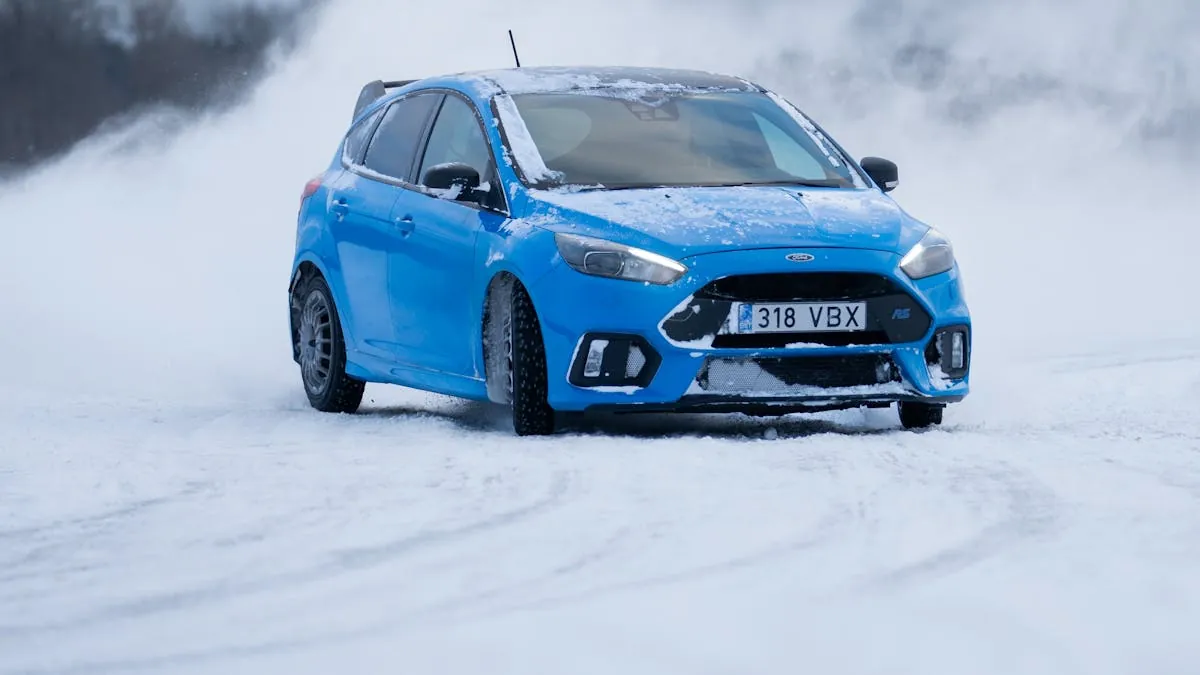
Snow and ice can stretch your stopping distance to as much as ten times the dry figure, so the golden rule is to slow right down and leave a huge gap. Beyond that, it's all about gentle, smooth inputs and the right tyres. Get those three things right, speed, smoothness and tyres, and winter driving becomes far safer.
Slow down and leave room
Grip is scarce on snow and ice, so everything takes longer: accelerating, braking and especially stopping. The Highway Code (rule 230) warns that stopping distances can be ten times greater than on dry roads, so drop your speed well below normal and leave a much bigger gap to the car in front. Most winter incidents come from carrying too much speed for the grip available.
Gentle inputs win
Sudden moves break traction, so smoothness is everything. The Highway Code (rule 231) advises driving at a slow speed in as high a gear as possible and accelerating and braking very gently:
- Pull away gently in a higher gear (second) to reduce wheelspin.
- Brake early and softly; let the car slow gradually rather than stamping on the pedal.
- Steer smoothly and avoid sharp inputs that can start a skid.
- Going downhill, use a low gear and stay off the brakes as much as you can.
The right tyres matter most
No driving technique makes up for tyres that can't grip. Good tread is essential (the legal minimum is 1.6mm, see the 20p test), and below about 7°C, winter tyres or all-season tyres grip far better than summer tyres because their compound stays flexible in the cold. For anyone who regularly drives in snow, that's the single biggest safety upgrade, see summer vs winter tyres.
Before you set off
Clear all the snow off the car, not just a porthole in the windscreen, check your tyre pressures (which drop in the cold), and make sure your tread is healthy. Carry a scraper, de-icer and warm layers, and only travel if you really need to when conditions are bad.
We fit winter tyres
We fit winter and all-season tyres at your home or work across the UK, so you're ready before the cold sets in. Book a fit.