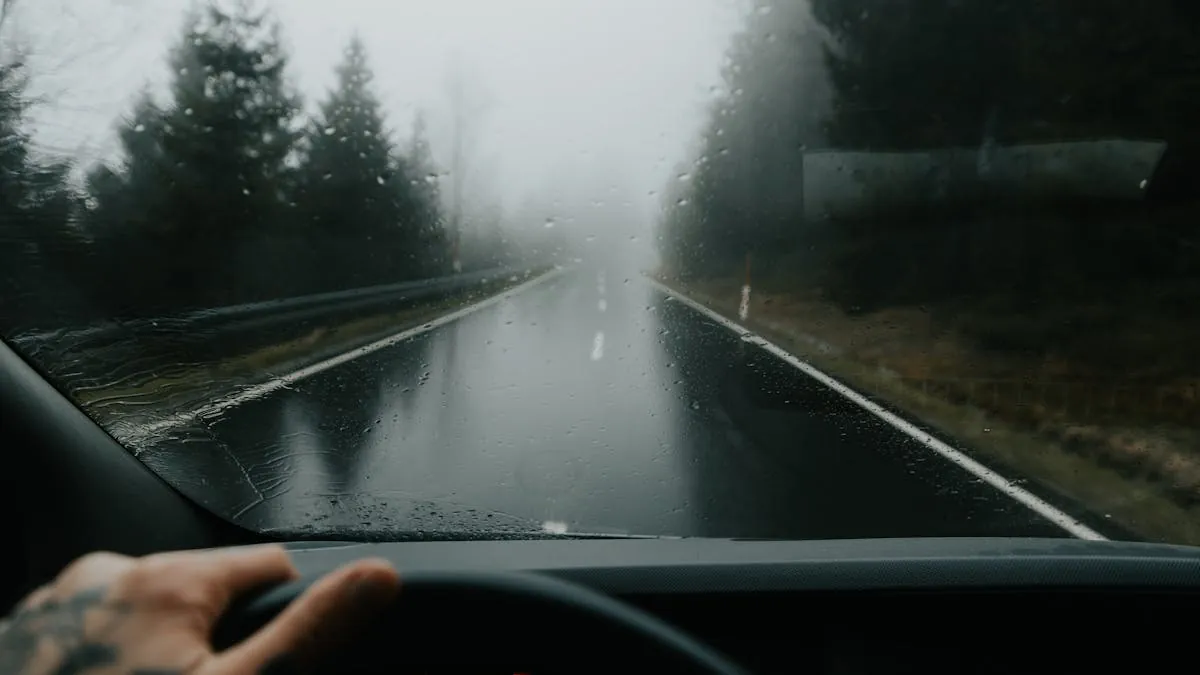
The single rule for fog is to slow down enough that you can stop within the distance you can actually see. Fog hides hazards until the last moment and usually comes with damp, slippery roads, so visibility and grip both matter. Use your lights correctly, keep your distance, and make sure your tyres are up to the conditions.
Drive to what you can see
In fog, your safe speed is whatever lets you stop within your visible distance. If you can only see 50 metres, you must be able to stop in less than that. The Highway Code puts it plainly in rule 235: be able to pull up well within the distance you can see clearly. This often means driving much slower than the limit, which feels frustrating but is the only safe approach when a stationary queue could appear out of the murk at any moment.
Using your lights correctly
Use dipped headlights in fog, always. The Highway Code (rule 236) says you must not use front or rear fog lights unless visibility is seriously reduced, which the code sets at below 100 metres, and you must switch them off when it improves, as they dazzle other drivers otherwise. Don't use full beam: the fog reflects the light straight back and makes it harder to see, not easier.
Fog means damp roads
Fog is suspended water, so the road surface is usually damp and grip is reduced, much like light rain, see wet-weather tyre safety. That means your braking and cornering grip depend on healthy tread and correct pressures just when you may need to brake suddenly for an unseen hazard. The legal minimum is 1.6mm across the central three quarters of the tyre, see UK tread depth law, but grip in the wet starts dropping well before that. Worn tyres and fog are a bad combination.
Don't hang on to tail lights
It's tempting to follow the tail lights of the car ahead to feel less alone in fog, but it pulls you too close and gives a false sense of safety, you're matching the speed of a driver you can't really see. Keep your own safe gap and your own safe speed regardless of what others are doing.
Stay tyre-ready
Healthy tyres give you the grip to stop for what fog hides. We can check and replace your tyres at your home or work across the UK. Book a check.