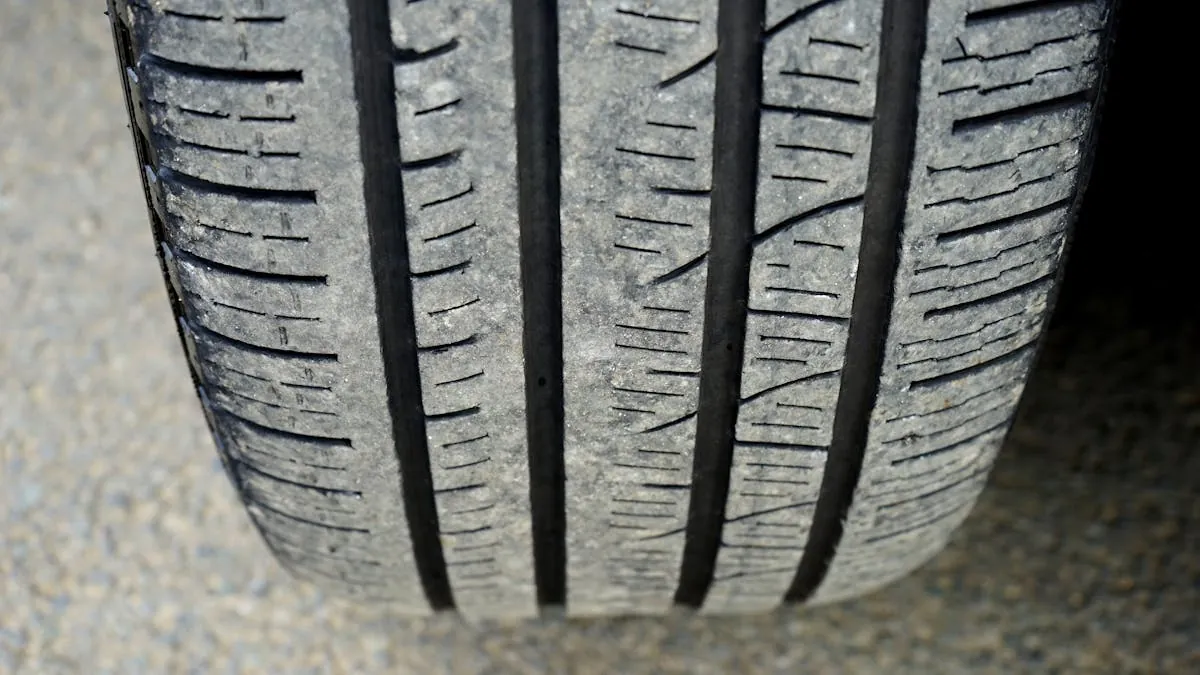
The legal minimum tyre tread depth in the UK is 1.6mm. That figure applies to cars, vans and light trailers up to 3,500kg, and the tread must meet it across the central three-quarters of the tyre's width, all the way around the wheel. This is set out in the law on tyre safety (GOV.UK) and reflected in Highway Code rule 89. It's one of the most checked items at the roadside and in the MOT, so it's worth understanding properly.
What the 1.6mm rule means
Tread is the grooved rubber that grips the road and clears water. As it wears down, stopping distances grow and the risk of aquaplaning rises sharply. The 1.6mm minimum is a legal floor, not a target. Tyre-safety charity TyreSafe and most manufacturers recommend changing tyres at around 3mm, because braking performance drops off noticeably between 3mm and 1.6mm, especially in the wet where it matters most.
How tread depth is measured
The 1.6mm is measured in the main grooves across the middle 75% of the tyre, around the complete circumference. A tyre can be legal in one spot and illegal in another if it's wearing unevenly, which is common with poor wheel alignment or incorrect pressures. Garages use a tread depth gauge; at home you can use the 20p test as a quick check between proper measurements. Many tyres also have moulded tread wear indicators, small raised bars in the grooves, which become flush with the tread when it reaches 1.6mm.
The penalties for illegal tyres
Driving with a tyre below the legal limit can cost you up to £2,500 and 3 penalty points per tyre. With four illegal tyres that's a potential £10,000 fine and 12 points, which is enough to lose your licence. Illegal tyres can also invalidate your insurance after an accident, an exposure that dwarfs the cost of new tyres.
- Tread below 1.6mm – illegal, MOT failure, fine and points.
- Cuts, lumps or bulges – illegal regardless of tread depth.
- Wrong size or type mixed on an axle – can also fail the MOT.
Why experts say 3mm, not 1.6mm
The legal limit and the safe limit aren't the same thing. Independent testing consistently shows that wet braking and aquaplaning resistance fall away well before 1.6mm, because shallow tread simply can't clear water fast enough. By the time a tyre reaches the legal minimum, its wet stopping distance can be many metres longer than a tyre at 3mm from the same speed, the difference between stopping in time and not. That's why TyreSafe and most manufacturers advise replacing at around 3mm rather than running tyres down to the legal floor. Treating 1.6mm as "still fine" is the mistake the recommendation is designed to prevent.
If your tyres are close to the limit
Don't wait for the MOT. If a quick check shows you're near 1.6mm, get the tyres replaced, because the safety loss has already happened well before the legal limit. Our mobile tyre fitters come to your home, work or the roadside across the UK, so you never have to drive on a borderline or illegal tyre to reach a garage. You can book in about two minutes with no deposit.