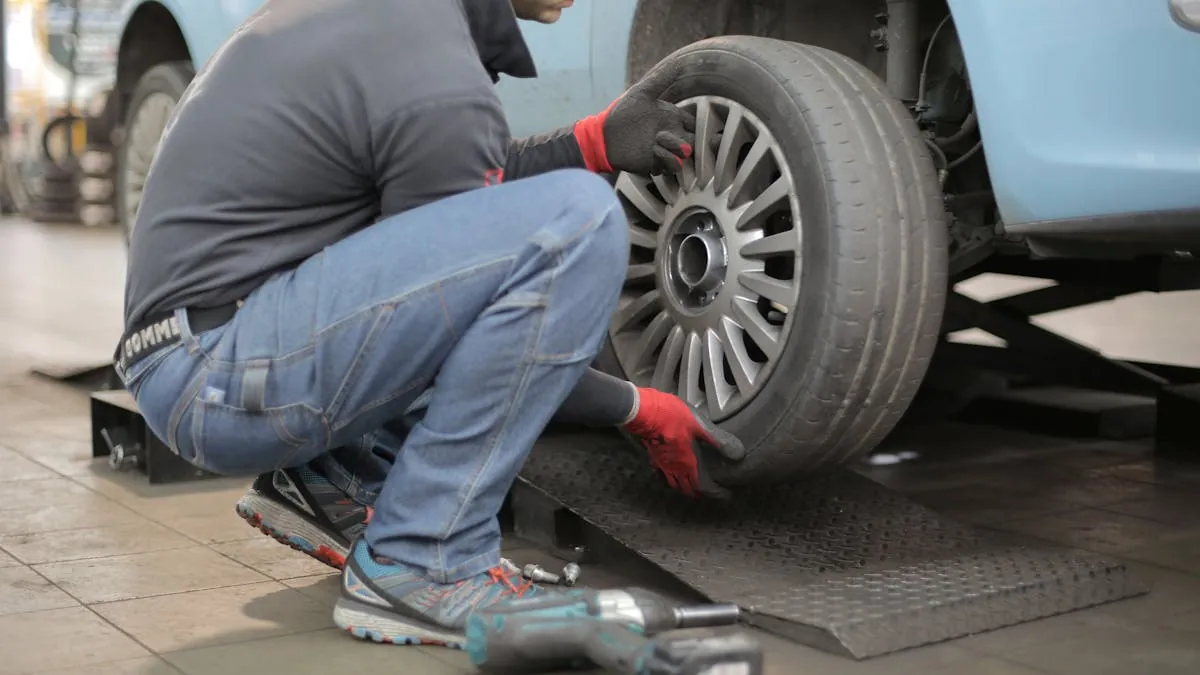
A proper tyre fitting is a small safety check, not just swapping one tyre for another. A good fitter inspects the wheel, fits a fresh valve, balances the tyre, sets the right pressure, torques the wheels correctly, and resets the TPMS, and will flag anything else they spot. Knowing what should happen helps you tell a thorough job from a rushed one.
It's more than a swap
Anyone can lever a tyre on. The difference with a quality fitting is the checks around it, the things that make the tyre safe and long-lasting. A rushed job that skips balancing or correct torque can leave you with vibration, uneven wear or a loose wheel, which is why what the fitter checks matters as much as the tyre itself.
The wheel and valve
With the tyre off, the fitter can see the wheel properly: any buckle, crack or corrosion where the tyre seals, which can cause a slow leak or vibration. A fresh valve goes in as standard, because the rubber perishes with age, and on a TPMS car the sensor is checked and handled carefully.
Balancing, pressure and torque
The new tyre is balanced so it doesn't vibrate, inflated to the manufacturer's pressure, and the wheel is torqued to the correct setting with a calibrated wrench, not nipped up by feel. These three steps are what make a fitting safe and proper, and skipping any of them is a red flag.
A look at your other tyres
A good fitter also glances at your other tyres while they're there, checking tread and looking for the uneven wear patterns that point to alignment or pressure problems. It's a chance to catch an issue early, before it scraps another tyre or leaves you with a MOT surprise, since the MOT fails any tyre below 1.6mm of tread across the central three-quarters or with cuts, lumps or exposed cords (GOV.UK).
We do it properly
We do all of this as standard on every fitting, at your home or work across the UK, and tell you honestly what we find. Book a fit.