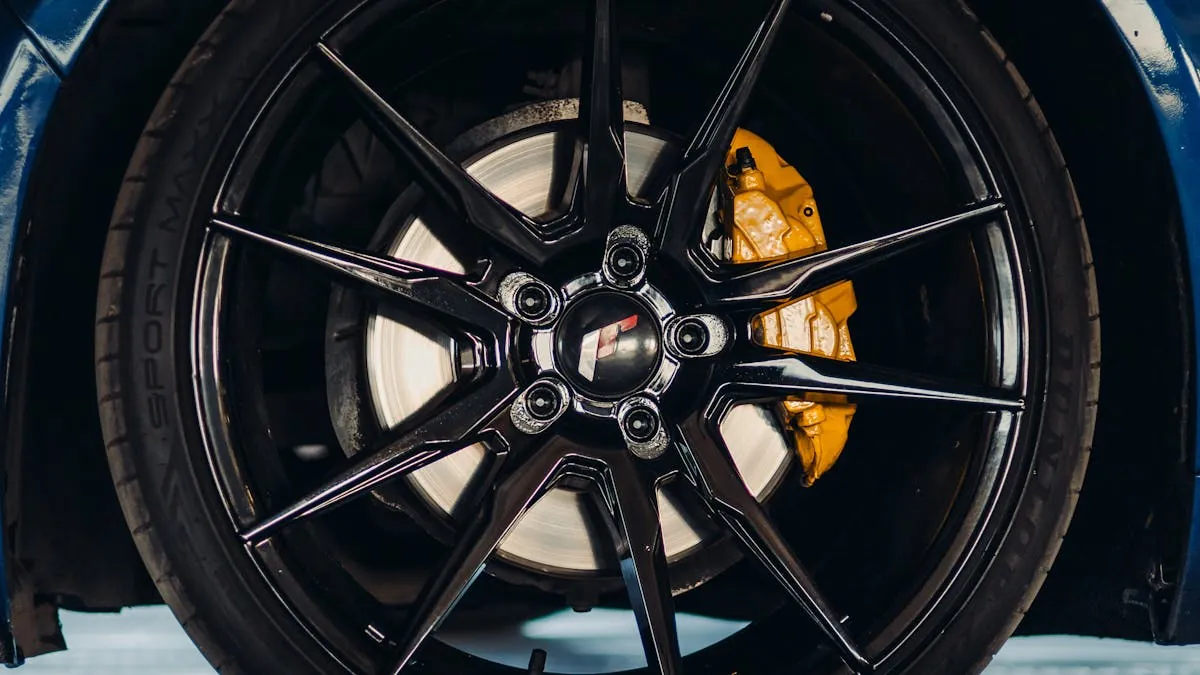
Most of the road noise you hear in a car comes from the tyres, not the engine, so the tyre you choose has a big effect on how refined the car feels. Tyre noise is rated in decibels on the EU label, and premium touring or foam-lined tyres are typically the quietest. For long drives, motorway miles and especially EVs, a quiet tyre is well worth having.
Where road noise comes from
As a tyre rolls, the tread blocks hitting the road and the air pumping through the grooves both generate noise. The pattern, the compound and the construction all affect how much. That's why two tyres of the same size can sound very different, and why quietness is a genuine design feature, not just luck.
Reading the noise rating
The tyre label shows external noise in decibels, alongside a letter class. The official EU tyre label sorts this into classes A to C, with A the quietest, and prints the exact dB figure on the label. It measures noise outside the car rather than in the cabin, so it's a guide rather than the whole story, but a lower figure generally means a more refined tyre. For cabin comfort specifically, independent reviews that test interior noise are the best reference.
What makes a tyre quiet
Quiet tyres tend to be premium touring or comfort-focused designs like the Michelin Primacy 4+ or Continental PremiumContact 7, and some versions use sound-absorbing foam bonded inside the tyre, such as Continental's ContiSilent and Michelin's Acoustic technology, to cut cabin noise further on premium and electric cars. If refinement is a priority, look for comfort or foam-lined variants from the premium brands, and check the noise grade and reviews for your size.
Noise matters more on EVs
On an electric car there's no engine note to mask the road, so tyre noise is much more noticeable. That's exactly why many EV-specific tyres include noise-reducing foam. If you drive an EV or a quiet, refined car, weighting your choice towards a quiet tyre makes a real difference to how the car feels day to day.
How much quieter is a quiet tyre?
A tyre that is 3 dB lower on the label is just noticeably quieter side by side, and a 10 dB difference sounds roughly half as loud. The decibel scale is logarithmic, so small numbers on the label represent bigger differences than they look. That said, the label figure is only part of what you hear in the cabin.
| Difference on the label | What you would notice |
|---|---|
| 1 dB | Barely detectable, even back to back |
| 3 dB | Just noticeable side by side; the sound energy is roughly halved |
| 6 dB | Obvious on any road surface |
| 10 dB | Sounds about half as loud to most people |
The label test measures the noise the tyre makes passing a microphone on a smooth test surface. It says nothing about the road you actually drive on. Coarse-chip country roads and the concrete sections of some UK motorways and dual carriageways are far louder than fresh asphalt, and that surface difference is often bigger than the gap between two tyres.
So use the label to rule out noisy tyres rather than to pick a winner. Compare tyres in the same size and the same class, then let independent cabin-noise tests and the tyre's design (touring pattern, foam lining) settle the choice.
What to look for when buying a quiet tyre
Look for a noise class A or B label, a touring or comfort pattern, and a foam-lining marking if you drive an EV or a refined car. Here is a checklist for finding the quietest option in your size:
- Noise class A or B on the EU label, and the lowest dB figure you can find in that class.
- A foam-lining marking such as ContiSilent (Continental), Acoustic (Michelin), PNCS (Pirelli) or SoundComfort (Goodyear). Our guide to acoustic foam tyres explains how they work.
- A touring line rather than an ultra-high-performance line. Within one brand, the comfort-focused range is usually quieter than the sports range in the same size.
- An asymmetric pattern with varied block sizes. Varying the pitch of the tread blocks spreads the noise across frequencies instead of producing a single drone.
- Wet grip A alongside the noise grade. Quiet should never come at the expense of stopping distance.
- All four matched. Two different patterns on the same car often produce a beat or hum that neither tyre would make on its own.
Size matters too. Wider, lower-profile tyres generally transmit more road noise than a narrower tyre with a taller sidewall, so if your car offers a choice of approved sizes, the smaller wheel is usually the quieter one. The approved sizes are listed in the handbook.
Why a quiet tyre gets louder over time
When a tyre that used to be quiet gets louder, uneven wear is the first thing to check. Once the tread blocks wear at different rates, the tyre starts to drum or hum however good it was when new. Foam lining does not prevent this.
Uneven wear that makes a tyre louder includes heel-and-toe wear on the rear axle, feathering from poor alignment, cupping from tired dampers, and running under-inflated so the shoulders wear faster than the centre. Each produces a distinct sound: heel-and-toe wear tends to give a low drone that changes with speed, while feathering is a higher, rougher note that changes as you steer. Our guide to uneven tyre wear shows what to look for.
The fixes are routine: keep pressures at the placard figure, rotate front to rear on the schedule in the handbook, and have alignment checked if the car pulls or the steering wheel sits off-centre.
A hum that changes when you load one side of the car on a bend, but not when you change road surface, is more likely a wheel bearing than a tyre. Our guide to road noise and humming walks through telling them apart.
Quiet tyres, grip and the law
Quietness is a comfort choice; wet grip and tread depth are the safety and legal ones, so treat noise as a tie-breaker between tyres that already grip well. The legal minimum tread in the UK is 1.6mm across the central three-quarters of the tyre, around its whole circumference, and each illegal tyre can bring a fine of up to £2,500 and 3 penalty points, as set out in the GOV.UK tyre safety guidance.
Tread depth affects noise as well as grip. Many tyres get slightly louder as they wear because the shallower blocks become stiffer and the pattern that was tuned for noise when new is no longer the same shape. If a tyre has become noticeably loud and the tread is close to 3mm, replacing it usually solves both problems at once.
One practical point on foam-lined tyres: they can be repaired after a puncture, but the foam has to be cut back around the injury before the patch goes on, and not every workshop will do it. Tell the fitter the tyre is foam-lined when you book.
We fit quiet tyres
We'll recommend a quiet, refined tyre with strong wet-grip grades for your car and fit it on your drive or at your workplace in London and the Home Counties, and further out in the Midlands when the diary allows, from our one base at Brent Cross, NW2. We give you the arrival time when you call. Tell us your registration and we'll talk you through the options in your size. Call 07473 720871 or book online.
