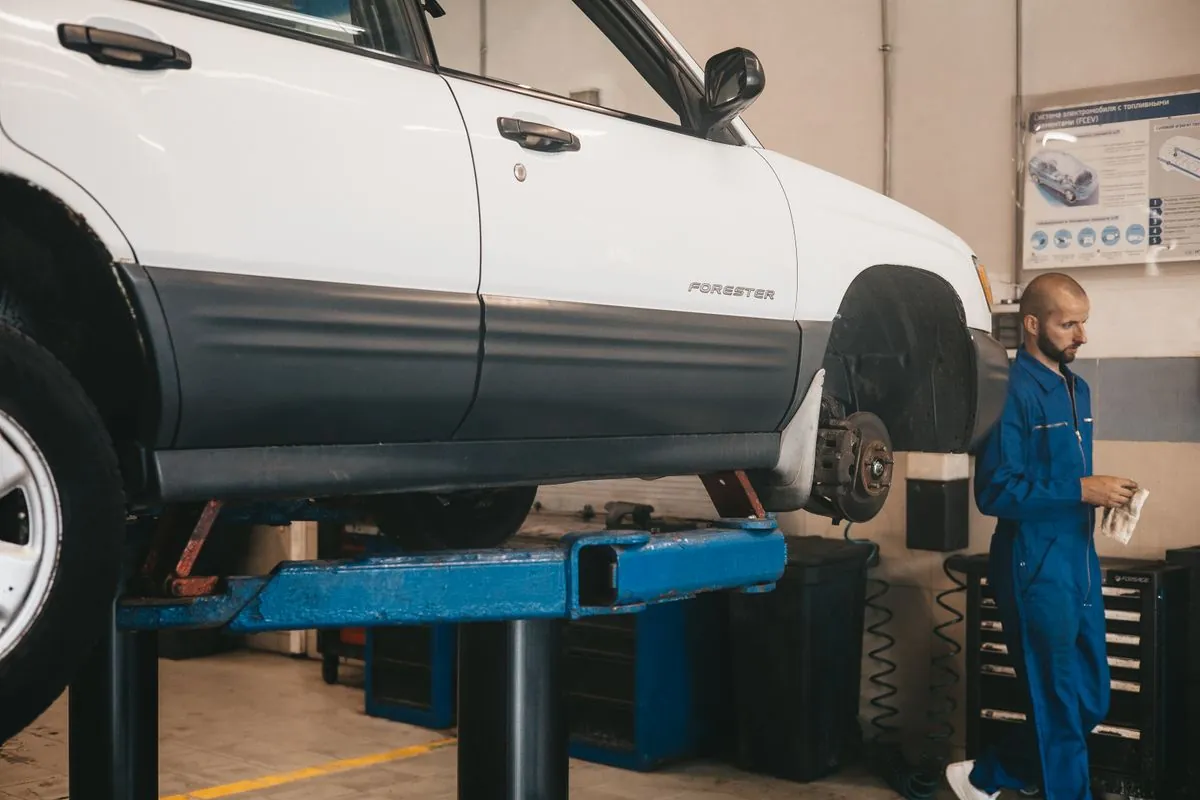
Tyre rotation means swapping the tyres between positions so they wear more evenly, which can extend the life of the whole set. Front and rear tyres wear at different rates: on a front-wheel-drive car the fronts do the steering, most of the braking and all the driving, so they wear noticeably faster than the rears.
Why rotate?
Without rotation, you can end up with two worn fronts and two near-new rears, or the reverse, which forces you to buy in mismatched pairs more often. Rotating evens out the wear so the whole set reaches the replacement point together, which is usually cheaper overall and keeps grip balanced front to rear in the meantime. It's one of the simplest ways to get more life out of a set, and it costs little or nothing if done at a service.
How often?
A common interval is every 5,000 to 8,000 miles, but always check your handbook, as some manufacturers advise differently and a few advise against it altogether. It's convenient to do it at a service or when you make a seasonal tyre swap, so it doesn't mean a separate trip. If you're not sure when yours were last rotated, the wear pattern is a good guide: a clear difference between front and rear is a sign it's overdue.
How rotation patterns work
There's a bit more to it than simply swapping front and back. For most cars with the same size tyres all round and non-directional tread, the rear tyres move straight to the front on the same side, while the fronts cross over to the opposite rear corners. The idea is to let each tyre experience both the driven and non-driven positions over its life so wear evens out. On rear-wheel-drive and four-wheel-drive cars the recommended pattern can differ, which is another reason to follow the handbook. The key point is that there's a correct pattern, not just a random shuffle.
Watch the exceptions
Not every tyre or car can be rotated freely. Check for these before swapping anything:
- Directional tyres can only move front-to-back on the same side (look for an arrow on the sidewall).
- Different front/rear sizes, common on performance cars, can't be rotated front-to-rear.
- Run-flats and asymmetric tyres have their own rules, so check the markings.
Rotation isn't a cure for bad wear
If tyres are wearing unevenly, fix the cause first, usually alignment or pressures, otherwise you're just spreading the problem around the car rather than solving it. Rotation maximises life on healthy tyres; it won't rescue ones being ruined by a fault, which TyreSafe stresses comes down to pressures and condition. We can rotate, check and replace tyres at your home or work across the UK. Book a visit.