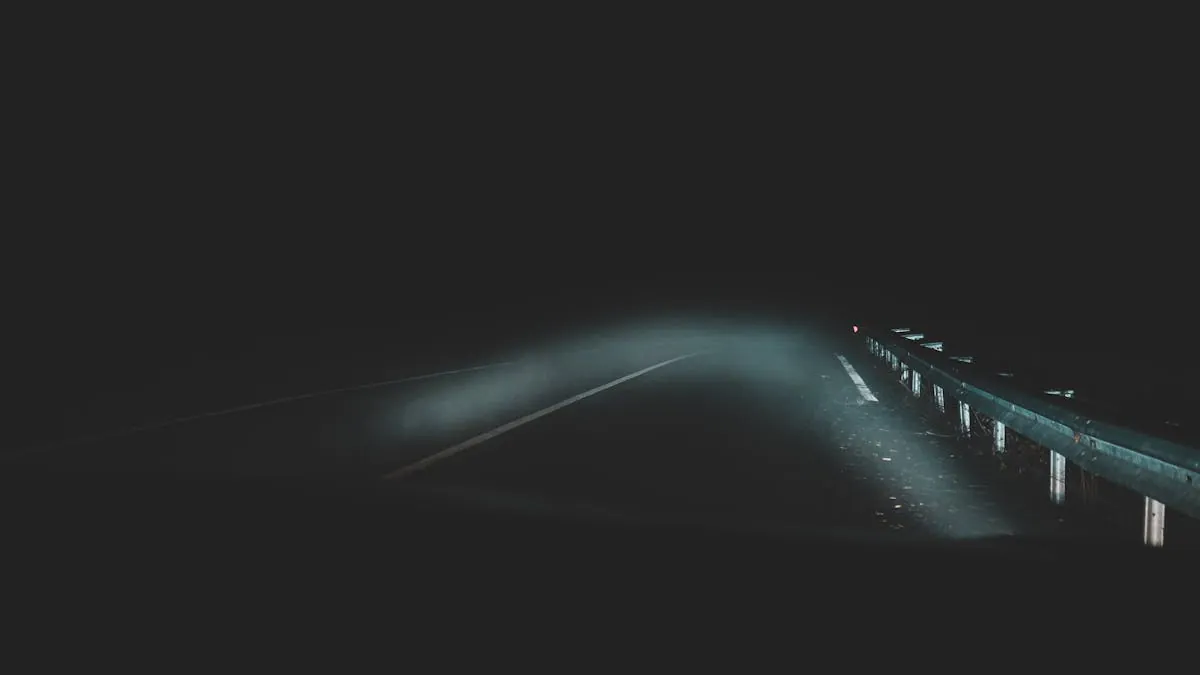
The challenge of night driving is that you spot hazards later, so you need to drive within the range of your headlights and rely on good tyres to stop in time. Lights, visibility and grip all work together after dark. Healthy tyres are the safety net for the moment a hazard appears later than it would in daylight.
Drive within your lights
On an unlit road, never drive faster than you can stop within the distance your headlights light up. This is the Highway Code's core rule on speed (rule 126): drive at a speed that will allow you to stop well within the distance you can see to be clear. Dipped beams reach roughly 50 metres, so your safe speed must let you stop within that on a dark road. It's easy to overdrive your lights without realising, which leaves no margin if something is in the road ahead.
See and be seen
Keep your headlights and windscreen clean inside and out, and make sure your lights are aimed correctly, dirty or misaimed lights cut your vision sharply. Use full beam on empty roads but dip promptly for oncoming traffic and when following another car. The Highway Code (rule 115) says to slow down, and if necessary stop, if you are dazzled by oncoming headlights; look to the left-hand verge to keep your line.
Why tyres matter more at night
Because you see hazards later at night, the distance you need to stop is even more dependent on grip. Worn tyres that brake poorly, especially in the wet, see wet-weather safety, leave you no margin when a hazard appears at the edge of your headlights. Good tread (the legal minimum is 1.6mm across the central three quarters, see UK tread depth law) and correct pressures are what turn a late-spotted hazard into a safe stop.
Tiredness and breakdowns
Night driving brings tiredness, so take breaks and don't push on when drowsy. And if you do break down in the dark, being seen matters more than ever: hazards on, sidelights on, and follow breakdown safety. A 24-hour mobile fitter can reach you if a tyre fails at night.
Keep your tyres ready
We can check and replace your tyres at your home or work across the UK, day or night. Book a check.