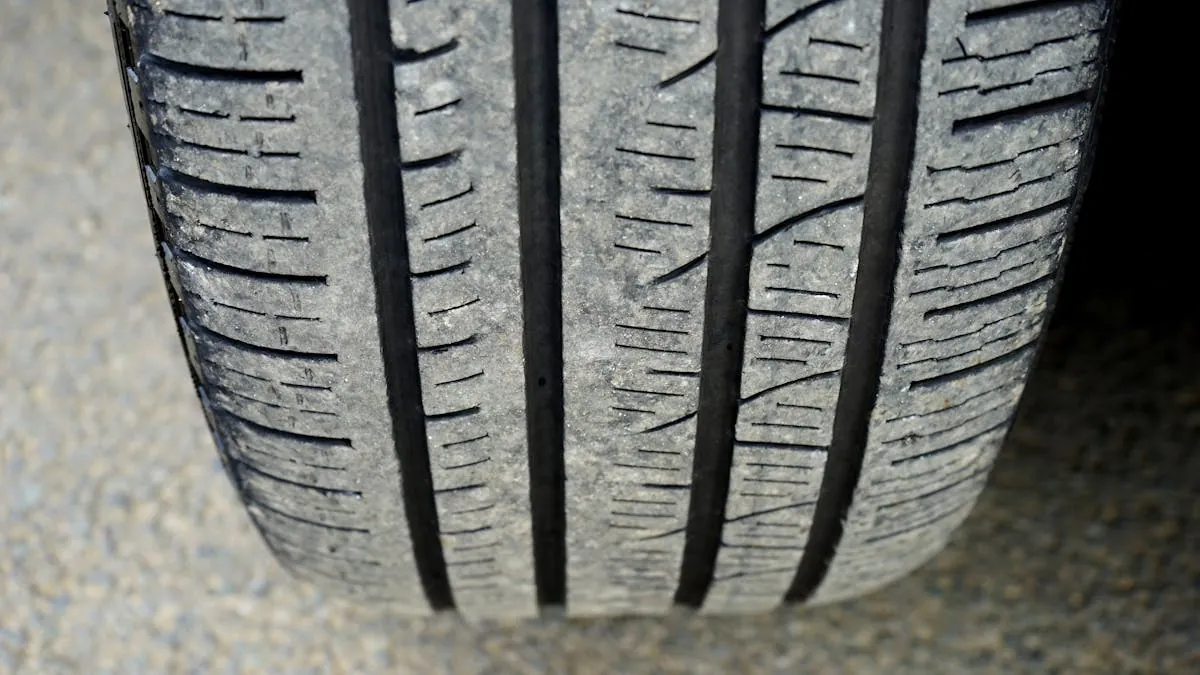
Price alone tells you little about a budget tyre. The tier is the most variable of the three, so judge each tyre on its EU label and independent test results rather than the sticker, and for the right car a good budget tyre is a sensible choice.
Not all budget tyres are equal
"Budget" covers everything from solid value brands to the cheapest no-name tyres, and the gap between them is huge. The better budget tyres can be perfectly safe, with decent wet grip and reasonable life. The cheapest unbranded ones are the gamble, where independent tests sometimes show much longer wet stopping distances. The badge tells you little; the label and tests tell you a lot. It also helps to know that several budget and mid-range brands are owned by the premium groups and made in their factories, which is a reasonable sign of quality control even at the lower price.
How to spot a safe budget tyre
Use the same checks you would for any tyre. Read the EU label and prioritise the wet-grip grade, which the official EU tyre label grades from A (shortest wet braking) to E. Look up independent test results for your size, and stick to value or mid-range brands with a track record, such as Avon, Falken or Nexen, rather than the absolute cheapest no-name option. A budget tyre that grades well for wet grip and tests reasonably is a sound buy; one with a poor wet grade is best avoided whatever the price.
Where budget makes sense
Budget tyres make most sense on low-mileage cars, older or lower-value vehicles, or when you're changing the car soon, see budget vs premium. For high mileage or lots of wet, fast driving, the premium safety advantage is worth more. Match the tier to how you actually drive rather than always reaching for the cheapest.
Budget tyres vs part-worns
One important distinction: a cheap new budget tyre is very different from a part-worn. A new budget tyre gives you full tread and a known history; a part-worn has short remaining life and an unknown past, and many sold in the UK don't meet the legal standard. TyreSafe investigations have found the large majority of part-worn tyres inspected were being sold illegally, and a tyre worn to the 1.6mm legal minimum takes noticeably longer to stop in the wet than one with more tread. If money is tight, a reputable new budget tyre is the safer place to spend it.
The three tyre tiers explained
Tyres are sold in three broad tiers, and the safest budget tyres sit at the top of the bottom tier, close to the mid-range. The names below are examples of brands commonly placed in each tier in the UK, not a ranking, and individual tyres within a brand vary.
| Tier | Typical brands | What you get | Best for |
|---|---|---|---|
| Premium | Michelin, Continental, Bridgestone, Goodyear, Pirelli | The strongest wet grip, quietest ride and usually the longest life; the highest price | High mileage, powerful cars, lots of wet motorway driving |
| Mid-range | Falken, Hankook, Kumho, Nexen, Toyo, Uniroyal, Firestone, Avon | Close to premium on grip and life at a noticeably lower price | Most family cars and most drivers |
| Budget | Value brands and retailer own brands, many made in Asia | Legal, type-approved tyres with wide variation in wet grip and wear between brands | Low-mileage, older or lower-value cars, driven gently |
The line between the tiers is blurred. Several mid-range and budget brands belong to the premium groups, so a budget tyre can come out of the same factory as a premium one, built to a simpler specification.
What separates a good budget tyre from a bad one is not the country of manufacture but whether the maker has invested in a decent wet compound and had it tested. Our guide to the best tyre brands in the UK goes brand by brand.
Reading the label on a budget tyre
Every new tyre sold in the UK carries a label with three grades, and on a budget tyre the wet-grip grade is the one that decides whether it is a sensible buy. The label is the same format across all brands, so it is the fairest comparison you have.
| Label item | Scale | What to accept on a budget tyre |
|---|---|---|
| Wet grip | A (best) to E | B is a good result for the price; C is acceptable for gentle use; avoid D and E |
| Rolling resistance | A (best) to E | Affects fuel use, not safety; C or better is a bonus |
| Noise | Decibels plus a class | Lower is quieter; a difference of a few dB is noticeable |
The gap between wet-grip grades is real braking distance, and it is the reason to steer clear of the cheapest D and E-graded tyres however low the price.
A B-graded budget tyre and a B-graded premium tyre may still differ, because the label tests one wet-braking measure and not aquaplaning, cornering or wear, so independent tests fill in the rest. Note that the label is not a guarantee of how long the tyre lasts.
When a budget tyre is a false economy
A budget tyre is the wrong choice when the car, the load or the mileage will find its limits. In these situations the extra cost of a mid-range or premium tyre buys real safety margin or real money back over the tyre's life:
- High annual mileage. A tyre that wears faster costs more per mile, however cheap it was on the day.
- Powerful or heavy cars. Performance cars, large SUVs and electric cars put more heat and torque through the tyre than a budget compound is designed for.
- Towing or regularly loaded. You need the right load index and often an XL (extra load) rating.
- Mixing across an axle. A budget tyre on one side and a premium on the other can make the car pull or behave unevenly in the wet. Keep both tyres on an axle the same make and pattern.
- Run-flat or specialist fitments. If the car was designed for run-flats and has no spare, stick with a run-flat from a maker with a track record.
For a small car doing a few thousand miles a year of town driving, none of these apply and a well-graded budget tyre is a perfectly rational choice.
What to check before a budget tyre is fitted
The tyre is only half of the deal; the other half is that it is the right tyre for the car and that it is fitted properly. Five things to confirm before the wheel comes off:
- Size, load index and speed rating match the figures in the handbook or on the door-shut label. A tyre with a lower load index than the car requires should not be fitted and can fail the MOT; a lower speed rating is only acceptable in narrow cases such as winter tyres.
- The E-mark. Tyres sold for road use in the UK must be type-approved, shown by an "E" or "e" in a circle or rectangle on the sidewall. A tyre without it should not go on the car.
- The date code. A budget tyre that has sat in a warehouse for years has already used up part of its life. Ask for recent stock.
- A new valve and balancing are included. Skipping either is a common way a cheap fit becomes a vibration.
- Old tyre disposal is included in the price, and the tyre is going for proper recycling rather than being resold as a part-worn.
The rules on tread depth, condition and penalties are the same for every tier. UK law requires 1.6mm across the central three-quarters of the tread and around the whole circumference, with up to £2,500 and three points per illegal tyre, as set out on GOV.UK.
A budget tyre worn to the limit is no safer than a premium one worn to the limit, so the checks do not stop once it is fitted.
