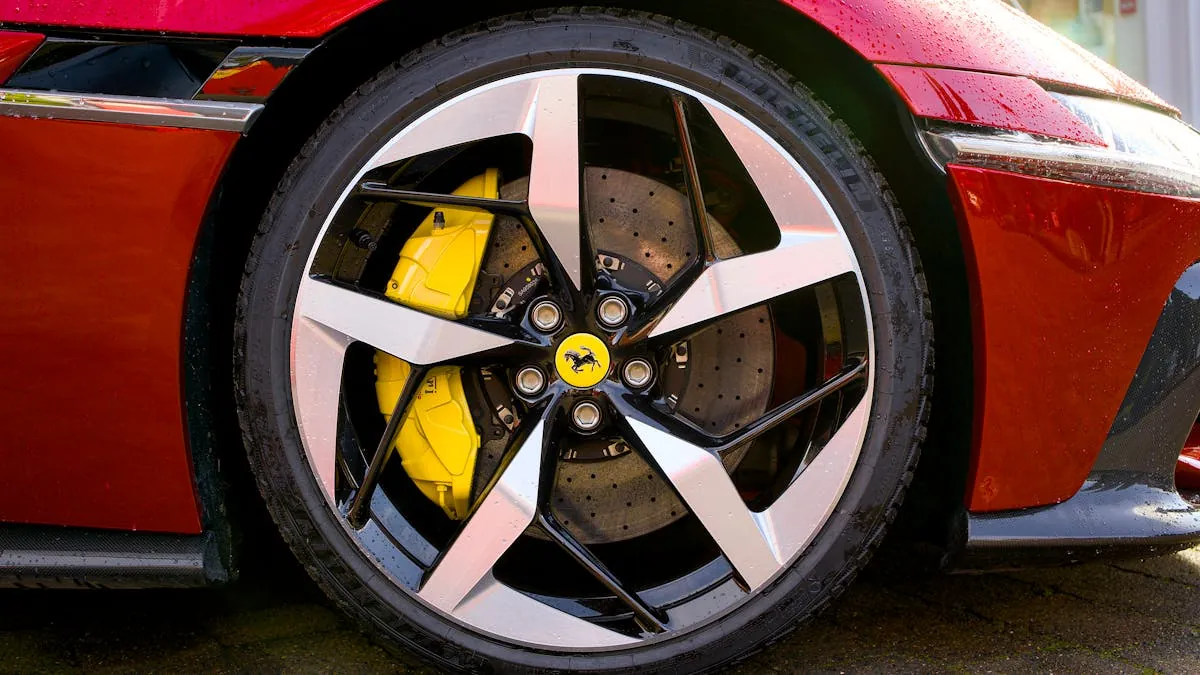
Direct TPMS sensors live inside each wheel and run on a sealed battery, so when that battery dies, usually after several years, the sensor needs replacing. The job is done with the tyre off the wheel and the system reprogrammed afterwards. Because a faulty TPMS fails the MOT on cars from 2012, it's worth sorting rather than ignoring.
Why TPMS sensors fail
A direct TPMS sensor is a small unit, often built into the valve, that measures the pressure in each tyre and sends it to the car. Its battery is sealed in and can't be replaced on its own, so once it runs flat, typically after several years, the whole sensor is replaced. Sensors can also be damaged by corrosion or by careless handling during a tyre change.
How replacement works
Because the sensor sits inside the wheel, the tyre has to come off to reach it, which is why it's usually done at the same time as a tyre change. The old sensor is removed, a new one fitted, the tyre refitted and balanced, and the system "relearned" so the car recognises the new sensor. A service kit (new seals and valve core) is often fitted at the same time to keep it sealed.
What affects the cost
The cost depends on the sensor type and your car. Some cars take a universal programmable sensor; others need a specific part. There's also the labour of removing and refitting the tyre, and the relearn procedure. If you're replacing a tyre anyway, the extra cost of a sensor is lower because the tyre is already off. We'll confirm the price for your car before doing the work.
Do you have to replace it?
If the warning light is on because of a flat sensor, then yes, to clear it and pass the MOT: a malfunctioning TPMS is a major defect on cars first used on or after 1 January 2012 (source). First, though, it's worth ruling out a genuinely low tyre or a slow leak, see slow puncture, because the light may simply mean a tyre needs air. If correct pressures don't clear it, the sensor is the likely cause.
We handle TPMS
We diagnose, replace and reprogram TPMS sensors when we fit tyres at your home or work across the UK, so you don't leave with a warning light on. Book a check.